Infographic text included for screen readers:
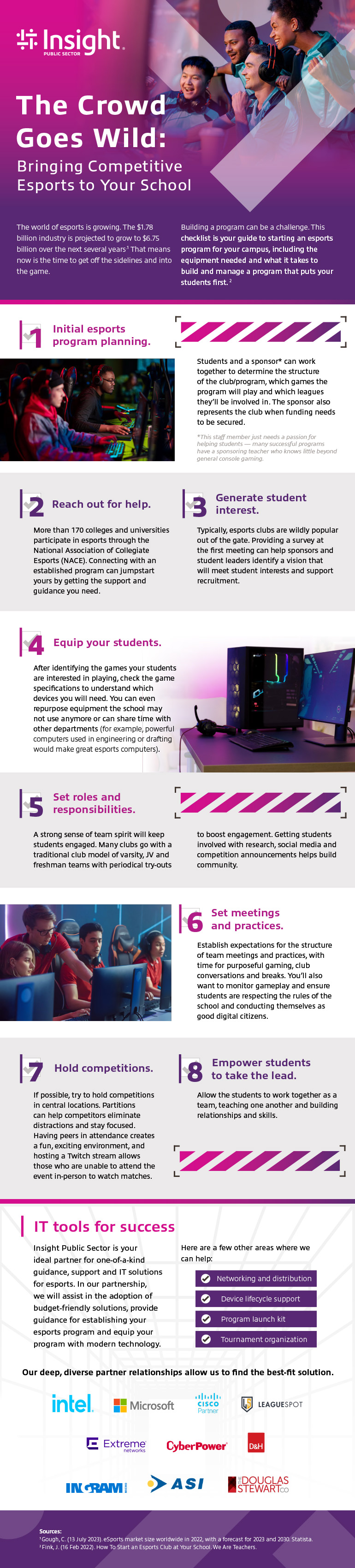
The world of esports is growing. The $1.78 billion industry is projected to grow to $6.75 billion over the next several years.1 That means now is the time to get off the sidelines and into the game.
Building a program can be a challenge. This checklist is your guide to starting an esports program for your campus, including the equipment needed and what it takes to build and manage a program that puts your students first. 2- Initial esports program planning.
Students and a sponsor* can work together to determine the structure of the club/program, which games the program will play and which leagues they’ll be involved in. The sponsor also represents the club when funding needs to be secured.
*This staff member just needs a passion for helping students — many successful programs have a sponsoring teacher who knows little beyond general console gaming. - Reach out for help.
More than 170 colleges and universities participate in esports through the National Association of Collegiate Esports (NACE). Connecting with an established program can jumpstart yours by getting the support and guidance you need. - Generate student interest.
Typically, esports clubs are wildly popular out of the gate. Providing a survey at the first meeting can help sponsors and student leaders identify a vision that will meet student interests and support recruitment. - Equip your students.
After identifying the games your students are interested in playing, check the game specifications to understand which devices you will need. You can even repurpose equipment the school may not use anymore or can share time with other departments (for example, powerful computers used in engineering or drafting would make great esports computers). - Set roles and responsibilities.
A strong sense of team spirit will keep students engaged. Many clubs go with a traditional club model of varsity, JV and freshman teams with periodical try-outs to boost engagement. Getting students involved with research, social media and competition announcements helps build community. - Set meetings and practices.
Establish expectations for the structure of team meetings and practices, with time for purposeful gaming, club conversations and breaks. You’ll also want to monitor gameplay and ensure students are respecting the rules of the school and conducting themselves as good digital citizens. - Hold competitions.
If possible, try to hold competitions in central locations. Partitions can help competitors eliminate distractions and stay focused. Having peers in attendance creates a fun, exciting environment, and hosting a Twitch stream allows those who are unable to attend the event in-person to watch matches. - Empower students to take the lead.
Allow the students to work together as a team, teaching one another and building relationships and skills.
IT tools for success
Insight Public Sector is your ideal partner for one-of-a-kind guidance, support and IT solutions for esports. In our partnership, we will assist in the adoption of budget-friendly solutions, provide guidance for establishing your esports program and equip your program with modern technology. Here are a few other areas where we can help:
- Networking and distribution
- Device lifecycle support
- Program launch kit
- Tournament organization
Our deep, diverse partner relationships allow us to find the best-fit solution.
- Intel
- Microsoft
- Cisco
- LeagueSpot
- Extreme Networks
- CyberPower
- D&H
- Ingram
- ASI
- Douglas Stewart
Sources:
1 Gough, C. (13 July 2023). eSports market size worldwide in 2022, with a forecast for 2023 and 2030. Statista.
2 Fink, J. (16 Feb 2022). How To Start an Esports Club at Your School. We Are Teachers.