Blog Build vs. Buy in the Autonomous Agent Era
By Simon Margolis / 29 May 2026 / Topics: Artificial Intelligence (AI) , Application development , Generative AI

Key takeaways
- AI code assistants help engineering teams deliver custom applications quickly and cost-effectively
- Autonomous agent fleets can map application architectures and API integrations in mere minutes
- AI agents can autonomously manage complex DevOps tasks and enterprise cloud deployments
- Bespoke development with AI achieves the “triple threat” of being fast, good, and cheap
The B2B technology landscape is evolving at a rocket ship pace. Thanks to a new generation of AI code assistants, engineering teams are bypassing traditional constraints to deliver custom applications that hit the “magic three”: fast, high-quality, and cost-effective. Extracting lessons from everyday challenges with data integration reveals just how profound this shift in application development has become.
To illustrate this shift, we will explore a scenario using next-generation AI-based development tools to build a custom weather application.
The challenge: Solving the “data tax” on fragmented systems
The weather app example we’ll be diving into addresses a problem common to both hobbyists and modern enterprises: fragmented data from specialized, siloed systems.
In this scenario, we consider a user who owns a Personal Weather Station (PWS) — a suite of backyard sensors including anemometers for wind speed, rain gauges, and hygrometers for humidity. While this hardware generates vast amounts of valuable environmental data, users are often subject to an unnecessary “data tax.” This tax comes in the form of recurring monthly subscription fees — ranging from $2 to $15 — just to access information from hardware they already own through third-party apps.
This isn’t just a hobbyist’s headache; it’s a universal enterprise reality.
While this specific scenario deals with hardware, the underlying friction is identical to what business leaders face every day: fragmented data trapped in siloed systems. Whether a team is trying to aggregate industrial Internet of Things (IoT) sensor data from a manufacturing floor or consolidate financial metrics across three different proprietary Software as a Service (SaaS) platforms, organizations are constantly paying a data tax for suboptimal interfaces that refuse to integrate with the rest of their tech stack.
A truly integrated solution to our example would need to aggregate disparate data streams into a single pane of glass, including:
- Local metrics: Direct, real-time feeds and historical trends from owned hardware
- External models: Third-party data, like Weather Underground data, to provide context
- Environmental metrics: Specialized data such as PurpleAir quality indices
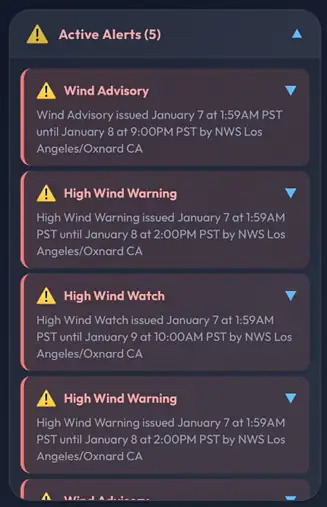
- Critical alerts: Real-time warnings from the National Weather Service (NWS)
Traditionally, consolidating these into a unified dashboard would demand significant manual engineering effort.
The solution: Autonomous orchestration via AI agent fleets
To address these gaps in our example, a bespoke solution was developed using Google Antigravity. This represents a shift from manual coding to the orchestration of autonomous agents. By leveraging advanced models such as Gemini 3.5 Pro and Claude Sonnet 4.6, the application architecture and Application Programming Interface (API) integrations were mapped in mere minutes.
A functional draft became operational on a local server within a 15-minute window. This was achieved by a fleet of specialized agents working in parallel:
- The Logic Specialist (Gemini 3.5 Pro): Managed back-end requirements, specifically engineering alert logic to ensure a high signal-to-noise ratio for notifications — finding the right balance between delivering helpful updates and being so intrusive that the alerts are disregarded.
- The UI Specialist (Gemini 3.1 Flash): Rapidly-generated front-end components, including charts and other UI elements that didn’t require complex logic.
- The Architect (Claude 4.5 Opus): Oversaw high-level systems engineering, including the registration of native alerting systems across iOS, Android, and Desktop Chrome. This involved creating keys, registering endpoints, running local commands on the Command-Line Interface (CLI), etc.
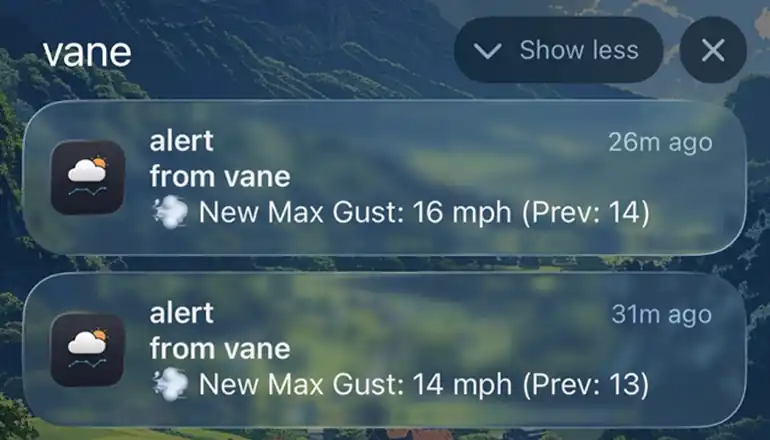
To ensure cross-functional alignment, the entire agent fleet maintained real-time documentation as they worked. This helped prevent one agent’s progress impeding another. Additionally, a dedicated, simple agent was leveraged to review every Git commit, ensuring appropriate commit messages were included, and the codebase remained consistent.
Scaling from prototype to enterprise cloud infrastructure
Transitioning this weather app from a local prototype to a production-grade cloud environment demonstrates that AI agents can manage complex DevOps tasks.
The fleet was given a set of business requirements: host the app on Google Cloud with aggressive cost optimization and high-availability alerting. The agent independently executed a deployment strategy including:
- Serverless execution: Utilizing Cloud Run for scalable, on-demand performance
- State management: Integrating Cloud Storage to maintain application state cost-effectively
- Operational continuity: Provisioning background worker tasks to maintain data freshness without high overhead
Upon approval of this strategy, the agent set everything up without any further manual intervention. It autonomously provisioned the Cloud Storage buckets, spun up necessary service accounts, and configured granular permissions — resulting in a fully deployed, working application in under an hour.
Continuous optimization with Google Jules
While initial development relied on orchestrating specific models via Google Antigravity, achieving absolute cost efficiency and data freshness required a fully “self-driving” approach. To accomplish this complex balancing act, the project transitioned to Google Jules.
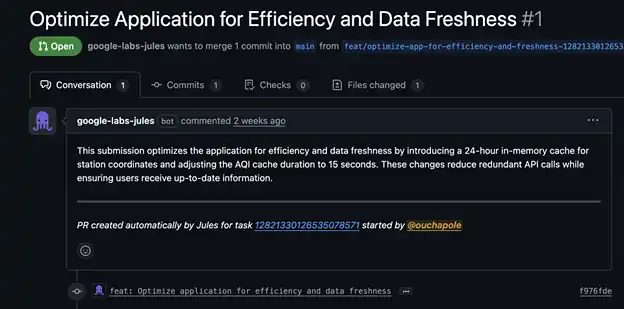
Jules acts as a fully autonomous software engineer. It was tasked with reviewing the repository and given the authority to make whatever changes were necessary — whether to the codebase or the underlying infrastructure — to achieve those goals. Working asynchronously, Jules submitted new Pull Requests (PRs) within minutes that were explained in detail and rich with code comments. For example, Jules introduced in-memory caching to reduce redundant API calls while ensuring data freshness.
Beyond performance, Jules seamlessly handled critical governance tasks. During an autonomous security audit, it proposed a new secret management system within the existing Google Cloud environment. It was also tasked with reviewing all third-party library licenses to determine open-source viability; Jules went the extra mile by automatically generating the CONTRIBUTING.md files alongside the requested licensing information.
Operational outcome: The new economics of development
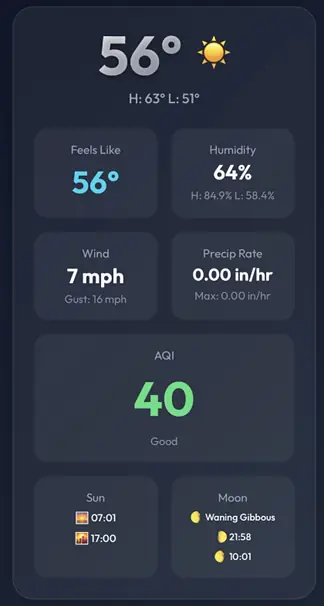
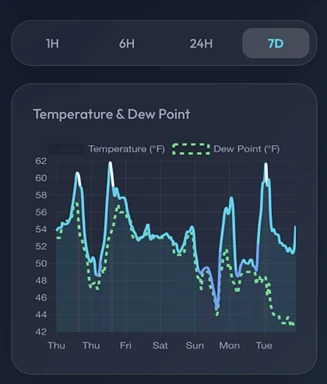
The data from this initiative reveals a staggering shift in development economics and technical accessibility. In a matter of hours, a project can move from zero baseline skills in specialized domains — like mobile development, native OS integration, and low-cost scaling — to a fully functional, scalable application.
The long-term operational costs are equally disruptive. After weeks of monitoring, the weather application maintained an average operating cost of $0.006 per month. This figure — approximately seven cents per year — is inclusive of all network traffic, cloud storage, and compute resources.
The enterprise impact: Re-evaluating “build vs. buy”
These advancements directly challenge the traditional “build vs. buy” dilemma. Historically, organizations have invested significant capital into making rigid SaaS suites conform to specific business needs, often hiring specialized architects to spend extensive cycles manipulating these platforms.
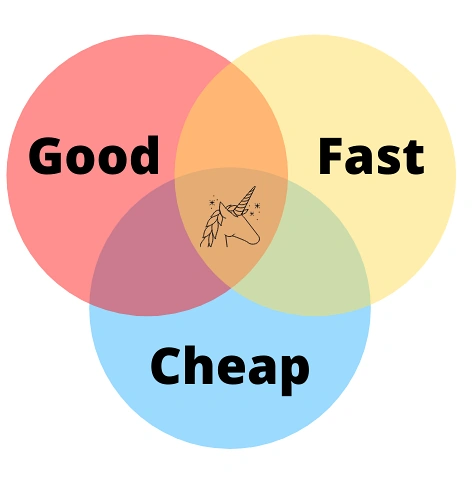
Now, autonomous agent orchestration enables organizations to bypass these traditional constraints. While engineers are often told they must choose only two sides of the project management triangle — fast, good, or cheap — the current trajectory of AI tools suggests a rare ability to achieve the “triple threat.” You can read more about this concept in this Wikipedia article on project management. By checking all three boxes, bespoke development is effectively moving into “unicorn” territory.
This is not to suggest that enterprise SaaS is becoming obsolete or that human software teams should be entirely repurposed. Instead, it introduces a new strategic avenue for evaluation. In an environment defined by constant innovation and the pressure to remain competitive, approaches like these can be major difference-makers. Autonomous agent orchestration enables organizations to get exactly what they want, when they want it, securing custom solutions with fewer compromises.
Check out “The AI Agent Handbook: 10 Practical Hacks to Use AI Agents for Business” for a strategic blueprint on using the Gemini Enterprise AI Agent Platform to build custom agents today.
About the Authors:

Simon Margolis
Associate CTO, Insight
With 15+ years of experience in IT and cloud solutions, Simon has held many roles in various fields, from engineering and solutions architecture to sales and business development.
 Monthly perspectives from global tech leaders.