Subscribe Stay Updated with Insight On
Subscribe to our podcast today to get automatic notifications for new episodes. You can find Insight On on Amazon Music, Apple Podcasts, Spotify and YouTube.
By Insight Editor / 4 Mar 2026 / Topics: Microsoft 365 Copilot , Microsoft Azure , Cloud , Digital transformation
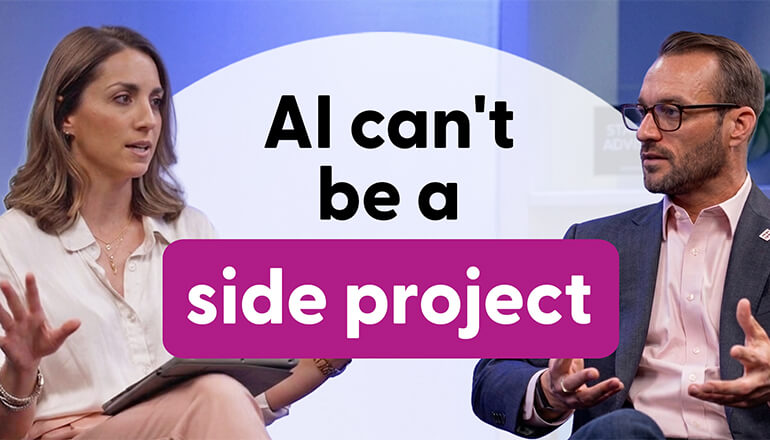
In this episode of Insight On, host Jillian Viner sits down with Ian Beirnes, VP of IT Systems at Texans Credit Union, to explore how a traditional credit union is rethinking its entire technology foundation. Texans Credit Union is moving from legacy, on‑premise systems to a cloud‑first strategy on Microsoft Azure, with a goal of being nearly 100% cloud‑based by mid‑2027.
Ian explains the business drivers behind this shift — from the operational drag of maintaining aging hardware to the need for scalable infrastructure that can support serving members across all 254 Texas counties. Along the way, Texans Credit Union has grown to roughly 130,000 members with about 10% year‑over‑year growth, making cloud migration in financial services a strategic requirement rather than a side project.
The conversation then moves into AI in financial services. Texans Credit Union rolled out full‑scale access to Microsoft 365 Copilot in October, layering AI‑powered productivity on top of its cloud foundation. Ian shares how a crawl‑walk‑run approach, grounded in practical use cases like meeting summaries and financial analysis, helped turn skeptics into advocates as tasks that used to take hours started to take minutes.
Security and compliance are a constant throughline. Ian discusses why long‑standing assumptions that on‑prem is always safer are breaking down, and how Microsoft Purview and strict permissions gave the team confidence that Copilot would respect existing controls and data labels. He also highlights the value of authentic partnerships, describing how Insight focuses on solving immediate problems and supporting an agile, modern infrastructure instead of pushing one‑off projects.
For IT and business leaders in regulated industries, this episode offers a clear view of what it takes to modernize at scale — from leadership buy‑in and standardized platforms to the metrics that matter, like migration milestones, growth, and member experience.
If you liked this episode, share it with a colleague.
Have a topic you’d like us to discuss or question you want answered? Drop us a line at jillian.viner@insight.com
— Ian Beirnes, VP of IT Systems, Texans Credit Union
Audio transcript:
Jillian Viner:
What about the risks of a CloudFirst strategy? Were there any naysayers that you had to convince that this was the way to go?
Ian Beirnes:
Yeah, I, I think there maybe has been a kind of traditional or historical understanding that things are more secure when they're on-prem, when they're behind your doors. But, you know, say I have to recognize that you also have limitations keeping things on-prem with the amount of investment that you can make in being able to support.
Jillian:
If you're making technology decisions that impact people budgets and outcomes, you're in the right place. Welcome to Insight on the podcast for leaders who need technology to deliver real results. Hi, I'm your host, Jillian Weiner, and today's conversation is with Anne Barons, VP of IT Systems at Texans Credit Union. And it's a great listen if you're trying to modernize in a highly regulated environment without losing momentum or trust. Texans Credit Union has been on the cloud first digital workplace journey designed to help them scale securely, including expanding their field of membership across all 254 counties in Texas, and shifting away from the time and energy drain of maintaining aging on-prem systems. Their strategy centers on moving core applications and data center capabilities into Microsoft Azure. Then layering productivity and security controls through Microsoft 365, including copilot. In this episode, Ian shares what it takes to win internal buy-in, why standardization matters more than most teams expect, and how they approached copilot adoption in a way that respects their security model so the organization can move faster without introducing unnecessary risk.
Jillian:
One quick note before we jump in. We recorded this interview live at Microsoft Ignite, right from the booth, so you might hear a little bit of background noise from the show floor, but the insights are solid. Let's go. Ian, thank you so much for sitting down with us for Insight on, we're very excited to talk to you today. I understand we've been on quite a journey together between Texans Credit Union and Insight. Just to kick us off, tell me a little bit about your day to day and what things were like when you first joined Texans Credit Union about three years ago.
Ian:
Yeah, well, first of all, thanks for having me. This is, this is great. Very exciting. Um, yeah, as you said, I, I joined about almost three years ago now, and I think we were in a place where we, um, operated on premise almost entirely and, uh, moved at a maybe slower pace than we do today. Um, just because, you know, we, things were on premise and we, we needed to maintain them. We invest a lot of time and energy into maintaining as opposed to kind of innovating and automating, which is, you know, what, what we hope to kind of shift the balance to here as we move forward. But, um, yeah, so I think when we first started, you know, we, we were spending a lot of time maintaining on-premise systems.
Jillian:
You are someone who seems, um, even in an industry where maybe things are a little bit slow or dated or traditional, you seem very bullish and forward thinking and trying to imagine what technology can do not only for your organization, your employees, but for your teams. What was it that drove Texans Credit Union to make this big bet on doing a cloud first strategy and really a digital workplace strategy?
Ian:
Yeah, so, well, it starts, you know, with the leadership and David Frazier and Mike McWethy and the rest of the executive leadership team and their support. So that, uh, that that's really critical that you have that kind of support. And then we have a kind of, uh, strategy and a goal to be the leading financial services organization across the state of Texas. And we have recently gained the ability to be able to operate in all of the counties in Texas. And so in order to be able to, uh, meet that, um, need or the demand of, you know, having members across the whole state of Texas, we need to have a technology, um, base and infrastructure that can serve that, that can scale to meet that need that that can move at that speed is standard and agile and all the things that, you know, we, we probably weren't, you know, quite there when I started, but we need, and so they, they recognized that and they, they empowered me and supported me. And, uh, you know, I think everybody recognizes that that's, that's something that we want to achieve is to be able to be the leading financial services organization for everybody in Texas.
Jillian:
So, help me understand kind of the before and where you are today. When you first came on, what was the state of Texans credit union? How, how large were you, how many clients were you serving or customers were you serving? What was the state of your infrastructure that, and what was the impact on your customers, even your employees at that time?
Ian:
So we, I think I probably, um, have about a hundred and I think 30,000 members. So that's, you know, the, the people that we serve, we, we call them members for credit union. And it's typically, um, you know, there's a, a kind of a demographic maybe that you a lot of credit unions can serve. You know, you're either in a particular industry, you live in a particular location or, you know, so that, that's kind of how we qualify members for ourselves. And so we, we have grown about 10% year over year, and we're at about 130,000 or so now. Um, when I started, we, we had, uh, probably a collection of systems that were somewhat disparate mm-hmm . And aging over time. I think it's natural. A lot of organizations are like that, and it becomes difficult to maintain all of them at the speed that, that you need to maintain to do the upgrades.
Ian:
And, you know, that that was really maybe a flash point or an inflection point is when you realize just how much an investment of time and energy it takes to do just regular upgrades for on-premise systems. And so you see that and you, you think, you know, we need, we need to move much faster than that. We need, and the standardization is really key with that. And so that was really one of the kind of Kickstarters is that, you know, we, we need to move off of these aging systems into the ones that can be maintained and scaled much faster than, than we could previously.
Jillian:
Yeah. And you mentioned that now you can serve, what was it, 450 counties? 250. 250 counties?
Ian:
Yep. I can serve now 54 counties is previously I think we were, um, we were almost entirely in the, what we call the metroplex, the Dallas and Fort Worth area. Mm-hmm . And now we can serve all counties in Texas.
Jillian:
And would you have been able to make that leap on your traditional on-prem infrastructure?
Ian:
No. no. It, it, it would, uh, it would certainly not be able to move at the speed that we need to move at. And I and I, the, the member membership, and we obviously as we grow, we want to continue to serve all age groups and, um, I think a lot of the more modern, um, users today, they expect things to be digital and frictionless and lists and fast everything. Um, you know, I needs to be, come, come to them in a fairly, um, quick, um, pace that, that's just kind of the expectation now. So, you know, we need to be able to meet that. And
Jillian:
You believe that a cloud first strategy would achieve that?
Ian:
Absolutely.
Jillian:
Yeah. What about the risks of a CloudFirst strategy? Were there any naysayers that you had to convince that this was the way to go? I know that, you know, you've, you've mentioned before to me in our side conversation that credit unions is a community and maybe not everybody's on board with the CloudFirst strategy. So why is that something that you believe in so much?
Ian:
Well, I, it, um, yeah, I, I think there maybe has been a kind of traditional or historical understanding that things are more secure when they're OnPrem and they're behind your doors. But you also have to recognize that you also have limitations keeping things OnPrem with the amount of investment that you can make in being able to support. 'cause every, you have a wide technology base that, that you operate in order to provide the services that you want to provide to your members. And that's not an easy thing to support that somebody can be an expert in all of these things and devote all the time into maintaining them and innovating them and all. That's just not a realistic value, um, position for most organizations. And a lot, certainly a lot of credit unions, they don't employ really large IT staff mm-hmm . And so I think you, you get the benefit of scale also with an IT organization and the amount of investment that a company like Microsoft can make in maintaining and modernizing the technologies that you want to use on a 24 by seven basis, being able to apply a level of standardization and security right up front is, is if it, when it's baked in up front, then you know, that's, that's the goal.
Ian:
That's the key. You don't want to have to try to retrofit it, which sometimes will happen when it's on-prem. You kind of have to go back and, and try to standardize things and it slows things down a lot when they're not standard. So when you can adopt standard systems that are secure, that's the goal. That's the win there. Yeah. Yeah.
Jillian:
In addition to this major infrastructure transformation, you also did a major workplace transformation and introduced Microsoft copilot to your employees. Tell me how that went. What was that like in the beginning stages? How did you get adoption to, to take hold? What was the journey?
Ian:
Yeah, so I, I think, um, you know, probably not unlike a lot of organizations that have varying degrees of, um, you know, interest or adoption initially. Some people are very excited and they want to go right out and try to use it. And some people are very hesitant and don't want to try it at all. They're very comfortable with their own kind of practices, and they're, they're fine with that. That's what they know and that's what they want to stay with. And so I think really kind of showing people what the potential of transforming your, a particular process that somebody does, here's what it was like, how, how you've always done it and here's how it it could be done. Yeah. Using this tool. And I think we've had a number of team members that have had this kind of aha that, you know, i, I work task that took hours could take minutes or less. And so that's a huge time savings and obviously everybody's in favor of that. And often it's sometimes more accurate too, you know, when you have to do a manual process for such a period of time. Yeah. You know, mistakes can happen. And so not that they can't happen with, you know, using ai. And that's certainly something a caution our guardrail that we talked, I talked to the staff about is that, you know, we need to maintain the level of skill and knowledge to make sure that what it's doing is correct. So you kind of are, you know, that the human in the loop there. Yeah.
Jillian:
Has there been a particular use case that's come out of your team that's impressed you, that maybe surprised you or you didn't anticipate them being, you know, used in this capacity?
Ian:
You know, there's, um, a few different, uh, use cases that, that I think have really kind of resonated with a, a large segment of the staff. Um, one of course is I think we talked about the meeting and, uh, meeting support that, uh, copilot can provide effectively, you know, uh, taking notes and assigning action items, um, even now, uh, facilitating. Uh, so that's exciting to try that out. But that is just that alone for a lot of people that effectively one, the person who had to take the minutes or assign the action items didn't really participate in the meeting because they had to focus on capturing all of that. And so we get that person back to engage in the meeting and really contribute and copilot can take care of the minutes and assigning the action items. And that's, I mean, that people are very, very excited about that . Yeah. Um, you know, we've had other things where, um, we do, as a financial organization, we use Excel a lot and kind of financial spreadsheets and people do a lot of comparison and calculation and, and that is, um, pretty manual process or has been. And so there's been a lot of interest and adoption in using co-pilot to kind of do a lot of this analysis for us. Yeah. Um, yeah. So yeah, people are very excited about that.
Jillian:
For leaders who are maybe at the early stages of their co-pilot AI adoption journey, what would be your top advice to them to make sure that it went off? I wouldn't say without a hitch, but at least to set them up for success. What's been your top learning?
Ian:
You know, I guess maybe kind of this crawl, walk, run where we, we bring people along. We, we communicate to everybody what I think if you, you tell people what the strategy is and show 'em the roadmap, tell them what the value is and can be, and make it very personal for people that, and that's part of the thing too is, is having the discussion with people about, you know, what are the things that you do on your team and this, and let me help you translate how this technology can help your particular job. Mm-hmm . And I, when it people can kind of internalize how it helps them do their job, then I think that they become much more engaged in, you know, getting us to the goal. Yeah. So yeah,
Jillian:
In financial services, like most organizations, security is absolutely paramount. Mm-hmm . And data leakage I think is probably one of the top concerns we hear about AI adoption. What gave you the confidence to introduce Microsoft Co-Pilot to your environment knowing that security and compliance and protection had to be embedded into your processes?
Ian:
Yeah, so, you know, for me it felt like copilot had to be the solution for us because it is integrated with, so we use purview to, and that is an excellent tool for controlling information. And copilot will respect all of the permissions and, uh, labeling that you put on the documents so people will see the information that only see the information that they're authorized to see, and only information that's authorized to be shared with other people, you know, or go outside of the organization. We have full control over all of that. And so this is a tool that respects all of all of the work that we put into purview to be, try to control that. Were, I think, other AI solutions may not respect that, and so we don't have the level of confidence or wouldn't have the level of confidence that our information would remain secure. And so we, we took the step of actually blocking everything except copilot so that all of our information will flow through Copilot and be authorized how we want it to be authorized.
Jillian:
Very smart. Yeah. I'm assuming that when you joined the company, we'll, again, three years ago, uh, Texans Credit Union already had some IT partners that were working with helping with a lot of different things. How has that changed since you've been on this journey? Because when you were, when you started, it was basically your mission to come on and, and begin and lead this cloud transformation mm-hmm . This digital workplace transformation, not only changing, you know, the infrastructure and tools that you're using, but what else has changed since you began this process?
Ian:
Yeah, so, uh, insight is an invaluable partner to me. Uh, they were one of probably I think six when I first started. And, you know, I, I would interact with the different partners and come have different discussions, and I think ultimately decided that Insight is a partner that I can go to and we can focus on what I need to solve my, here's the, the issue that I have today and let's, let's solve that. And then we can talk about the next issue I have. And things kind of grow organically, but it is, it's an, an authentic discussion about helping me solve my problems and just, just the, the issue that I have of that day, and we can focus on that together. And I felt like that was a kind of a genuine partnership and insight was, you know, genuinely in interested in helping me solve my problems and not necessarily, you know, just talking about additional business opportunities. Yeah. Certainly that stuff will happen organically, but if I feel like we are there to solve my problems, then that's, that's what's important to me. So we,
Jillian:
You've been on this transformation journey, you've introduced copilot, your team has had access to copilot full scale since you said October one. Um, so they're really getting their arms around it. And the cloud journey, I'm imagining is still progressing mm-hmm . So where do you see your, your business being, your organization, being a year from now, what's gonna be the biggest noticeable difference, not only for your team members, but also for your members?
Ian:
We want to be the leading financial services organization for the state of Texas, for everybody in Texas. Every, every Texan in every county. We would love to be the financial services partner for them. And so in, in order to do that, we need to have a, an infrastructure, um, that that can scale, that is modern, that is agile, and that's, that's really where we're headed, is to be able to adopt technologies that can do that, that can move at the speed that we need to move at, that can innovate at the, at the speed that we want to innovate. We have a lot of amazing team members with a lot of great ideas, and we want them to be able to focus their energies on serving our members and coming up with new and innovative ways to serve our members. And so the more that we can allow them to put their energies toward that, that's my mission, is to help them be successful. And so adopting technologies that can do that, that's, that's where we're heading.
Jillian:
Ian, thank you so much for taking the time to talk to us today. It's been an absolute pleasure.
Ian:
Yeah. Thank you for having me. Thanks
Speaker 3:
For listening to this episode of Insight on. If today's conversation sparked an idea or raise the challenge you're facing, head to insight.com. You'll find the resources, case studies, and real world solutions to help you lead with clarity. If you found this episode to be helpful, be sure to follow insight on, leave a review and share it with a colleague. It's how we grow the conversation and help more leaders make better tech decisions. Discover more@insight.com. The views and opinions expressed in this podcast are of those of the host and the guests, and do not necessarily reflect on the official policy or position of insight or its affiliates. This content is for informational purposes only, should not be considered as professional or legal advice.

Marketing Manager, Insight
As marketing manager for the Insight brand campaign, Jillian is a versatile content creator and brand champion at her core. Developing both the strategy and the messaging, Jillian leans on 10 years of marketing experience to build brand awareness and affinity, and to position Insight as a true thought leader in the industry.

VP of IT Systems, Texans Credit Union
Subscribe to our podcast today to get automatic notifications for new episodes. You can find Insight On on Amazon Music, Apple Podcasts, Spotify and YouTube.