Subscribe Stay Updated with Insight On
Subscribe to our podcast today to get automatic notifications for new episodes. You can find Insight On on Amazon Music, Apple Podcasts, Spotify and YouTube.
By Insight Editor / 15 Jan 2026 / Topics: Artificial Intelligence (AI) , Cloud , Digital transformation , IT modernization
Chief Dan Munsey looks at the 150,000 emergency calls his department handles each year and sees 150,000 failures. Not failures of response — his team is exceptional at that. Failures of prevention. That mindset shift is at the heart of this conversation. Chief Munsey leads one of the largest fire departments in the United States, but the lessons here apply far beyond public safety. He's navigating the same challenges facing leaders in every industry: legacy systems that no one wants to touch, siloed data that doesn't talk to each other, a workforce trained for yesterday's problems, and a culture that rewards reaction over prevention.
His solution? Stop trying to modernize incrementally. Build for 2030 instead of optimizing for today. Chief Munsey walks through his four-pillar roadmap — culture, infrastructure, budget reallocation, and training — and explains why transformation doesn't require new money. It requires new thinking about how to deploy the resources you already have.
The conversation also tackles the human side of change. Chief Munsey shares how his team went from skeptics to advocates of new technology, why he takes leaders from across his organization on annual retreats to sit next to people they've never met, and the moment he realized that bold vision only works when your people feel supported first.
Whether you're leading a fire department, a sales team, or an enterprise IT organization, the formula is the same: people first, then process, then systems. Have a vision bold enough to inspire. And build a plan — or four — to get there.
If you liked this episode, share it with a colleague.
Have a topic you’d like us to discuss or question you want answered? Drop us a line at jillian.viner@insight.com
— Dan Munsey, Fire Chief, San Bernardino County Fire, 11:22
Audio transcript:
Dan Munsey:
My number one job isn't to respond to emergencies. My number one job is to prevent the emergencies from ever occurring. Most of the fire departments out there are based in technology From the 1990s or before. I've said this in front of Congress and it was during a presentation on fire service technology. I said, there's a lie that we tell us truth. And that that this nation has a technology, uh, fire technology problem. We don't actually have a fire technology problem. We have a fire technology adoption problem.
INTRO:
Welcome to Insight on the podcast for leaders who need technology to deliver real results. No fluff, no filler, just the insight you need before your next big decision.
Joyce Mullen:
Dan, thank you so much for joining us today at Insight on Joyce. It's thrilled to have you
Dan:
A complete honor. I was able to join you at your, uh, conference last year and was able to get on stage and then right after me was Billy Bean , one of my heroes talking about Moneyball. Yeah. And we had such great conversations offline to be able to continue to have him here. I love it.
Joyce:
We love the business we get to do with you. We are honored to work with you. We are also so honored to have you here to talk about not only how you are leading basically San Bernardino County to become not only the biggest, but also the best firefighting outfit we have in this world. But you're also positioning yourself to be the best, not for today, but for 2030. That's right. And I am so excited to hear about your leadership, your technology adoption approach, but 'cause it's so applicable to all of our industries that we serve. And anyway, it's a huge pleasure to have you here. So thanks for joining us.
Dan:
Oh, thank you. Do you know that the fire services is second slowest adopter of technology?
Joyce:
Is that right?
Dan:
Only behind the construction industry. Is that right? And so I've grown up in a world where if, if a burning a building's burning, we know what to do, how to crawl it up underneath the smoke, how to get up underneath the fire, how to put the, the, the fire out. And as paramedic, if someone dies in front of me, I know what to do. But nobody's ever sat down and talk to me about all the skill sets that's really required to be innovative as a fire service. Mm-hmm . And so these conversations and gathering, uh, books and, and meeting other industry professionals, bringing in lecturers into our organizations, allowing us to get ahead. And our goal is to think to 2030 and beyond. But it's also, here's another thought I have is, uh, you know what the greatest catalyst for innovation is? The greatest catalyst for innovation.
Joyce:
When your back is up against the wall and you gotta do something different.
Dan:
That's probably close the, I think the greatest catalyst for innovation is jealousy. Oh. When another organization looks, I hadn't thought of that. And says, look what San Bernardino's doing now. Why don't we have this? Yeah. And so our mission really is to be the most innovative fire service in the United States. Mm-hmm . And I tell the men and women that work for us every day, we are mm-hmm . Because if you don't say who you're going to be, you won't get there. The second is, how do we expose the rest of the fire service? 'cause I don't want to be the second, uh, behind the construction industry for innovation. We need to be the first, I mean, this is only human lives,
Joyce:
But it's a different approach for the public sector. It's, I think it's a different approach for the fire service. The fact that you've established this bold vision to be the best firefighting outfit or in the United States, but also to a 2030 standard instead of to a 2025 standard is pretty differentiated. And we are delighted to be a play some small part in this, but we're mostly wanna explore today, not only what we're doing with technology in the fire service, but also what you're doing with leading an incredibly dedicated team, focused on a very clear mission, but also one that has to change. And that is the most exciting part. And that is very, very applicable to every industry we serve and every organization we serve. So thanks again for being here.
Dan:
Thank you. You said something really important to me is that I'm leading a team of leaders. Yeah. That leadership team is so critical to how we move forward. I all the organization all the time, being a leader of subordinates is hard. Being a leader of leaders is infinitely harder. That's who we need to be. We are a leadership team. I'm dispensable to this leadership team, but what's never dispensable is our team. Right? How we uphold each other, our one vision, our mission, our one voice. How do we align our goals, not my goals, our goals mm-hmm . To achieve something greater.
Joyce:
Well, we're gonna talk about all that. Great. But before we get into the details, let's play a little game. Two truths and a lie. Two truths and a lie. I know you spent a lot of time testifying before Congress. I know you talked to a lot of fire service, uh, professionals. I know you talk to a lot of technology companies, but let's start by talking about you and I'm gonna, I'll do mine first. Okay. Okay, great. Okay. Um, I, we have teammates at Insight Okay. In 27 countries. That's one. My husband and I have five kids, number two. And I visited 19 na 15 National parks.
Dan:
Oh my gosh. And one of these is a lie. Well, you do not look like you have five kids, first off, but you're probably trying to trick me there. 15 national parks is achievable, but I wanna bet that you actually have a greater penetration of the world in 27 different countries. That's the lie.
Joyce:
Okay. Well, actually, um, that's true. So 27 countries and we have four kids.
Dan:
Oh, . Well, so I was right.
Joyce:
You were close. You were close. Well,
Dan:
We're gonna get you 28th country before I leave today. Yeah.
Joyce:
Okay. We're ready. We're ready. Okay. Your turn.
Dan:
Okay. Um, how about this? I dropped outta high school. I believe I've testified in front of Congress that, um, we don't have a wildfire crisis in the United States. And the third would be that, um, I respond to 8,533 calls on federal land outside of my jurisdiction per year.
Joyce:
Okay. Um, you've testified before Congress that we don't have a wildfire,
Dan:
Which is, I mean, everybody would say we have a huge wildfire crisis.
Joyce:
Absolutely. Does.
Dan:
The world is burning down,
Joyce:
But that's actually true. Then you probably have testified that you don't, we don't have a wildfire crisis,
Dan:
I think differently than most people.
Joyce:
Okay. So that's the lie. It is
Dan:
A lie. Okay. And that's pretty good. I would, I would've guessed that you would've thought I didn't drop outta high school,
Joyce:
Or, well, I didn't think that either, either. But
Dan:
I did actually drop outta high school. But you did. I got a master's degree later in like a 3.96. But it was an incredible journey to get into where I'm at today. But to the wildfire crisis, everybody looks and says, this nation has a wildfire crisis. Look at all this fire on tv and during the summer you turn on the news and there's San Bernardino County burning LA County. LA County burning into San Bernardino. Yeah. The fact is, is we don't have a wildfire crisis. We have a wildland management crisis. And if we were to manage the wildland, then the fires would be smaller, less frequent. And so that tells you a little bit about my personality, is that I wanna get to the root cause. Yeah. I wanna understand why. And let's focus on that. Why let's not the signal, let's not focus on the noise.
Joyce:
So let, let's get to that root cause. So what are the core challenges that are driving this land management crisis?
Dan:
Boy, that is the most complicated question on Earth. Um, what I've testified to Congress is you have a lot of siloed out agencies mm-hmm . And for example, right now, just in the Department of Interior, you have the US Fish and Game Fire Service, you have the Bureau of Land Management, fire Service, you have the Bureau of Indian Affairs Fire Service, the National Park Service has their own fire service. And there's four different departments that have four different missions, but really their vision could be lined up. Mm-hmm . And then you have the US Forest Service and agriculture. And as we're doing wall land management, each of these agencies have different ways of doing it. And then if I take the Forest Service, if each forest has a different supervisor who sets their own tone for how they're gonna manage land, and then you have species and habitat overlays, you have the EPA of air quality.
Dan:
Holy moly. And so all of these things affect how we're going to manage our land. The, the conversation today is, well, why aren't we using fire? This is what the, the Native Americans did. And if we use good fire, then we'll be able to burn off the landscape and keep the fire smaller, low intensity. And they're a hundred percent right. Mm-hmm . But we have 150 years documented years of putting out fires. And now the conditions that we face, it's very difficult to actually light the good fire because of all these different agencies. Uh, how do I protect the habitat? What species may be in danger, the air quality. And so all these factors make it very difficult for us to manage this land.
Joyce:
So does that, but just so I understand, with all these different agencies, so fragmented, who's in charge,
Dan:
That's the problem. Yeah. And so one of the things we're advocating for is really to put a fire czar into the White House to look for that alignment. So nobody reports that fire czar, but they have influence to bring the secretaries together, Congress together, all these different agencies to change our landscape. Mm-hmm . And this is very, very complicated because very, people are very opinionated. Um, this year, I dunno if you saw the fire in the Grand Canyon that burned down the lodge.
Joyce:
Oh, yeah, yeah, for sure.
Dan:
That was actually considered a good fire. This was a fire they
Joyce:
Got outta hand
Dan:
Naturally occurred, and they decided to allow it burn. Yeah. And, uh, I'm at odds whether you do that or not. I believe that good fire should be introduced to the landscape when you have the holding forces and you have the control lines in place, and you have favorable weather. Mm-hmm . In this case, the fire started, they didn't have the control lines. They didn't, they, they thought they had enough people to contain the fire enough aircraft. But as the fire season progressed, other fires were starting, their resources were pulled off mm-hmm . And unfortunately that fire still burning today. Yeah. So it's very complicated. But I wonder how AI is gonna change this landscape in the future. Yeah. That's what I sit up at night and think about how do we, humans are biased and certainly AI can be biased. Mm-hmm . And we're being taught, uh, last year I wrote a ethical, it was for the National Fire Protection Agency, but the ethical use of ai, it was a white paper mm-hmm . On how should the fire serves, engage with ai mm-hmm . And focusing on some of these biases. But I'm, but I, what I love is that insights really looking at this problem. And you're gonna bring resources to the public sector, to public safety so that we can make better decisions as we move
Joyce:
Before. Yeah. So the, so the, the core challenges, just to summarize then, are this very fragmented ecosystem today. We don't have a fire czar. There's kind of, it's hard to figure out how to have somebody in charge. That's right. The second is this culture really, which is been really, really good at putting out fires. But trying to figure out how to move that culturally to a bit more proactive and sort of think about how to set and manage good fires or deal with good fires.
Dan:
I love that. Let me, so my number one job, we, we respond to about 150,000 calls per year. That's
Joyce:
A lot.
Dan:
And it, we're one of the bigger fire departments in the United States, but I look at that as 150,000 failures. Mm-hmm . Be, and we do that really well. But my number one job isn't to respond to emergencies. My number one job is to prevent the emergencies from ever occurring. So how do we shift that thinking in the fire service to a greater prevention?
Joyce:
Absolutely. So that cultural sh shift from reactive to proactive is no small feat. We're gonna get to the leadership pieces of this in a second. And then the third piece is really the tech. Um, you told me a story when we were together at our sales kickoff a few months ago, and you talked about how really common technology was not yet available to your firefighter fighters and your team. That's right. Can you talk a little bit more about that? Yeah. Before we even get to ai. Sure.
Dan:
I, I think that, you know, if you watch the movies and you see what's happening on the silver screen, uh, you, you think that fire service has all this tech, and we would immediately know where all our firefighters are. We're tracking our firefighters. You would think that we would know where the firefighters were in relationship to the fire perimeter. Um, you would think that we would know the biometrics on our firefighters. You would think that each one of 'em has a device in their hand that they could look and they could communicate clearly. And the fact is, none of that's true. Yeah. And so firefighters, I, I told this to Congress too. They didn't, they didn't know how to react. But it was true. I said, the US Forest Service is the very best 1990s fire department. There is very best 1990s. And the fact is, most of the fire departments out there are based in technology from the 1990s or before.
Dan:
We still carry land mobile radios that were introduced in the 1930s. We don't track our firefighters. We don't know where they are as they're moving around a fire ground. If somebody calls mayday, I hope that they're able to tell me where they are in a building, which can be very hard if obscured with smoke and fire. Sure. I, six months ago, I, I, uh, had a friend, Kevin Skinner, he worked for Orange County Fire Authority. We'd gone to the fire academy. He went into a structure fire and unfortunately had a cardiac arrest and passed away. Mm-hmm . We don't check our biometrics. I want to know, are firefighters gonna die before they die? Mm-hmm . And we don't have any, any way to communicate other than this radio in most jurisdictions. Mm-hmm . 96% of them. And so the more advanced fire departments like ours are starting to do these things.
Dan:
And that it's really important to me that we regionalize this, we'll give it to you for free. We'll tell you how we did this. Mm-hmm . And a lot of agencies look at us and they say, well, we don't have the money for this. You guys must, you are rich in Southern California. At the end of the day, San Bernardino is one of the poorest counties in California. Wow. But we do it through partnerships. Mm-hmm . Like we have with you at Insight through relationships, building relationships. And I tell our team all the time, relationships get you to the table. Mm-hmm . And if you're not at the table, you're what's for dinner. Yeah. And then inspiring this cult, this this culture of innovation that what got us here isn't going to get us there. What are we doing to get to 2030? So your reference 2030, we're the first fire department to actually have a roadmap, a strategic technology plan, looking at 2030. And we focused on four things, the culture that we wanna inspire mm-hmm . The second was the infrastructure we need to build to support the future. Mm-hmm . You can't just adapt this technology when your IT division is focused on building computers and networking together. Mm-hmm . That's, that's 1980s. Right.
Joyce:
Right.
Dan:
The third is, how do we reallocate our funding? Your budgets, there's no new money. If there was new money, guess what? I would hire more firefighters to have more fire engines. Right. But how do we look at our legacy budgets and reallocate 'em towards the future? Mm-hmm . The fourth thing is, let's train like it's 2030. Too many of us are training like it's 1990 and that's why Right. We're the best 1990 firefighters out there.
Joyce:
Yeah. And what's so incredible is that in your environment, once you have cracked the code, that you're, you're in the middle of cracking with this public private relationships. It is pretty easy for other fire services to copy you, I would imagine. Is that, is that true or is that a,
Dan:
We're gonna make it easy for 'em. Yeah. And so I, I speak often nationally at a, I'm asked to present to different associations and groups, and we talk about what does good look like in the future. Mm-hmm . We present our plan, our tech plan is being copied across the nation. I want it to be copied. That's awesome. Yeah. Change the, just change the name. I don't care.
Joyce:
The most sincere form of flattery.
Dan:
Well, yes. Um, but in the end, I think it's a fire chief can envision the future, but I think a lot of organizations think they're just going to arrive at that future. Yeah. You have to have a plan. Yeah. And in the fire service, we think of four different plans. All if we ever come up with one plan, it's four . We have the primary plan, the alternate plan, the contingent plan, the emergency plan. It's really smart. Four different ways to get there. And we're sharing our roadmap mm-hmm . To move forward.
Joyce:
So what was it, was it when you became the fire chief five years ago or so of San Bernardino County that, that made you say, I'm gonna change this? Or what was, what triggered you to say, I'm gonna adopt a very different approach to, to going after this problem? I
Dan:
Don't know. It's such a great question. I met, uh, a gentleman called Jack Danger man, who owns Esri. I, it was, I didn't know anything about Esri. I met him at the end of the day. We got into exchange and he was explaining to me how GIS arc GS works and how, how he creates digital twins of the world. And he stopped and he looked at me and said, it must be really hard for a fire chief to understand this. Well, I knew that Jack Dangermond had started Esri because he was a landscape designer. Mm-hmm . And, and, and he literally used to sketch it out on craft paper. And then in the sixties he decided to save him on vinyl records. And that's how he started Esri. So I knew this walking into the conversation and when he said, this must be hard for a firefighter to understand. I looked at him and I said, well, if a landscaper can do this, I think I can understand it.
Joyce:
Good
Dan:
For you. And his team was shocked that I would say that to the boss. And he laughed and he looked at his team and said, I like this guy. Let's work with him. And that inspired me to start thinking differently. And then how do we leverage technology? How do we build these partnerships? Well, who, who do I need to meet? Who do we need to meet? Who do we, what do we, we need to introduce to our culture to take us to the next few years?
Joyce:
So let's talk about that. So, so you identified the need, you got inspired by landscapers. You figured out how to start by putting together this public private partnership. And by the way, we on the tech side, love this kind of technology for good, uh, idea. We wanna help make this world a better place. We live for this. Well, you are. And how did you get, how'd you get everybody together? Tell me about that.
Dan:
So in the case with insight, lemme tell you this story. It was meeting with Microsoft and Microsoft came to me and I was the International Association of Fire Chiefs Tech Council President. And we were starting to highlight different tech to the fire chiefs. So they knew it was about out there. And we were asking the technology leaders to do TED Talks, explain their why mm-hmm . Then the how, and then what they did. Mm-hmm . And then we'd engaged in two way dialogue to make sure that the technology being presented to us is technology that we can actualize. Mm-hmm . And so when Microsoft came to me, a guy named Mark Starr mm-hmm . And he said, Dan, Microsoft is the worldwide leader for public safety technology. And I said, no, you're not. Nobody. Look, you do a great job with Excel. You do a great job with Word PowerPoints, wonderful SharePoint, great public safety tech.
Dan:
Mm-hmm . I don't believe it. Mm-hmm . And so they sponsored a webinar and showed how Microsoft's the engine behind lots and lots of technology for eye opening. Then Mark and Sein, who's a Mark's replacement now came and they said, you know, Dan, we'd like to work on a problem for public safety. What is it? And one of the realizations we are starting to have is our data's very siloed and most of our fire service data that we've considered important is in our dispatch centers. And it's called Computer Aid Dispatch System. And I was starting to realize this computer aid dispatch, CAD was nothing more than just a hard drive with software on it. Mm-hmm . And we were putting all our data on-prem into this hard drive. And we were being told by our data managers that you, you can't touch this data 'cause we don't want you to corrupt it.
Dan:
Uh, we were having real trouble doing APIs to actually push or pull data mm-hmm . From this. And they were telling us, we can't store all these data sets that you wanna store. We're only gonna focus on our run data. Hmm. And then I, then they dispatch centers continued and said, but you know what? We do need to link our dispatch centers together. And, uh, in San Bernardino, we've been very good at that. I think we have 13 different dispatch centers that are connected. CAD to cad. Literally hard drive to hard drive. This is 1970s technology were considered innovative here. Yeah. in other county, LA County. Mm-hmm . The dispatch centers during the Eaton and Palates fire. If you wanna order resources from a different dispatch center, then you have to pick up the phone and you need to call 'em or you need to get on the radio and request resources.
Dan:
There's no technology bridge Wow. Between the dispatch centers today. Wow. And again, this is 1970s technology we haven't adopted. So as we were describing this problem to Microsoft, and we started looking at all of the other data that's coming in to our world smart city initiatives mm-hmm . And which data is gonna be important to us for the future to keep our citizens safer, to create our better safety for our firefighters. Mm-hmm . Create a more efficient response. Where are we gonna put all this data? And so Microsoft said, uh, well, what about the cloud environment? Mm-hmm . And then they hired Insight mm-hmm . To be the partner there. And we're building out the public safety cloud with the vision of being able to create better interoperability between not only the agencies, but the data that we need today and tomorrow. How do we access this data? And it's incredibly complicated.
Dan:
I'm so happy that your team's been so engaged on this. They're doing such an amazing job. And as a matter of fact, over the next couple of days we'll be meeting with them and we're gonna continue to design the, the data infrastructure, what's required, uh, what are the different needs from the different fire departments. If you've seen one fire department across the nation and there's tens of thousands, then you've only seen one fire department. We all do business very differently from each other. Yeah. Right. Different calls, different data. Even that cad, that computer aided dispatch center, we use a company called Central Squares, and that company has 33 different operating systems on their cad. Oh my goodness. That make, holy
Joyce:
Moly.
Dan:
Do you, how do you take and standardize your data? How do you, how do you interpret this data? How do you, how do you ensure that with the right security, you give it to the right person at the right time in the right form? How do prevent data overload? Where are you gonna store all this data? Is it real time? Is it near real time? All these questions are being answered right now, but it's such a great project. And as I go around the United States and I tell fire chiefs about this, they get excited because they see finally, this is how we're gonna get to the future. They just didn't know how to do it.
Joyce:
Right. Well, what I love about this is you're not trying to go from seventies technologies to eighties technology to nineties technology. That would take way too long.
Dan:
I'd be getting on eBay, looking for
Joyce:
. You're going for kind of nirvana as we describe it, right. In the 2030 version of what Awesome looks like here. And will the public safety cloud support all of those fragmented agencies that you talked about? So if there's an opportunity to prevent a fire, then all of those agencies will be working from the same data. And is that the vision
Dan:
During the Palisades fire, there was errant evacuations. They evacuated millions of people Yeah. On accident. Yeah. And how does that happen? And if you look at it, one of the probable causes, it was, there was no definitive base layer, GIS base layer. Right. And so their maps weren't lining up with each other. Oh, is that right? And so as they were deciding who was gonna be evacuated, because there's discrepancy between the different layers, they evacuated millions of people on accident mm-hmm . And so Yes. How do we bring in the definitive layers so we can agree, uh, these, this is the foundation, these are the facts, this is the facts. Yeah. And then let's build on it. But there's so many different use cases. One of the fire chiefs that I know, he's excited just simply because we can put our employee MOUs, our, our memor understanding our contracts in there.
Dan:
And then he can use AI to search the contracts and immediately figure out what is everybody else doing so he can give it to his workforce. Yeah. Or how do we take all of our policies and put it in one location. Now we can search for the best policies as it pertains to emerging issues, uh, for lithium ion batteries. Mm-hmm . For instance, or maybe some of the hydrogen cells mm-hmm . Are firefighter turnouts. Uh, we have have contained a chemical called p ffo s for years mm-hmm . Which we found is actually causing cancer and firefighters mm-hmm . So what are the best policies for cleaning the turnouts or purchasing pulse? He just wants to be able to search all that knowledge that's out there. Mm-hmm . And there again is no database for this mm-hmm . So how do we get government to take all of these, these policies they've normally kept OnPrem and start putting it in the public safety cloud operationally, being able to quickly move resources across the United States. So we're looking at a national mutual aid system. Right now, California has a pretty robust mutual aid system, but as you go to Indiana, there is no mutual aid system. Right. You have to pick up the phone and you need to call another jurisdiction and say, Hey, we just had a tornado. Can you give us a couple of engines? Wow.
Dan:
But what is an engine? Yeah. Here in California we've defined it. We know exactly the typing, what tools and equipment, what qualifications, how many people are on it, how big's the pump, how big's the motor So that when we order a type one fire engine, that means a structure fire engine. I'm getting this engine, and if I order a type three, that's a brush fire engine. Indiana, if you order fire engine, what are you getting? So we need to solve these big problems. So
Joyce:
That's really, those are data architecture questions that you have to establish. Right. And then That's right. Get everybody to aligned. And so those are all parts of this plan. Absolutely. And so what are the big elements of the plan?
Dan:
Wow. Um, that's really what we're spending the next two days on. It's, uh, again, every agency is going to want to manage their data differently. And first part is telling the agency, you can't keep all your information in your cad, you can't keep it siloed out in your different clouds. Right. Um, we have third party and solutions and, and a good example, uh, will be Kronos. Right. We had a large amount of data in Kronos and then they crashed. Right. And it literally cost me a half a million dollars to get through that crash. Bringing staff to rebuild our systems, we need to actually control our data. Yeah. And so having each agency kind of have almost a lakehouse of their data that they control in the cloud. Right. And then the second piece is how do we operationalize this data for emergencies mm-hmm . How do we, when I have an emergency and you have an emergency and an emergency occurs over here, who do we, how do we decide which one has priority?
Dan:
Yeah. Yeah. Where are the resource is going to go? What's the decision making trees that need to be there? What can we, can we do autonomously? Where do we need the humans in the loop Yep. On this decision making. Yep. So there's several different steps as we move forward, but we really need to focus on, uh, and then for me, the, the kind of the ice cream is how do we operationalize the smart city initiatives mm-hmm . And when I was speaking at your convention last year, I mentioned that, um, I asked, is there really a smart city out there? Mm-hmm . There really isn't. There's smart data silos. Right? Right. And so what we see in the cities, the, the traffic information. As a fire chief, I want this traffic information so that I, I want the signals to actually route the civilians away from the emergency.
Dan:
I want the signals to know where the fire engine is. So it can give a direct, uh, quick response to the emergency, the water systems. Right now, I have to pick up the phone. I have to call the water company and say, Hey, would you boost this pump? I need more fire flow in this hydrant. Why can't we do that autonomously based on what is the needed fire flow? There's a lot of little elements that we're gonna have to start combining in the future. And I look at the public safety cloud as the place Yep. To do this. It's very exciting.
Joyce:
So you have identified and outlined the vision best fire service in 2030, but do it now. You've figured out the partners you need in order to get this done. You kind of, you have a rough outline and you'll, you'll refine that through workshops of the operational plan that is required to to, to build that. And then let's get to the last part, which is the cultural piece. Can you, I have been so excited to learn more about your leadership style and hear about how you lead this team of dedicated professionals and leaders. Can you talk a little bit about how you're dealing with the cultural piece and how you are preparing your team to adopt and really embrace and thrive with these technology changes?
Dan:
So I think two points is culturally the mindset needs to be we're better together. Yep. And I don't just mean our own fire district. I mean, there's a whole world of great in intuitive, innovative people out there that we need to bring together. And in the public safety cloud, that's the Western Fire Chiefs Association. Mm-hmm . This is one of our associations that in the western United States, we all belong to. We all trust. Yep. And one of the questions we had to answer on the public safety cloud is who's going to own it? Mm-hmm . And, uh, the, there's a possibility the federal government could have owned it mm-hmm . But we weren't sure the next shutdown what's gonna happen. Right. Yeah. Yeah. The state was very interested in it. Individual, uh, agencies were interested, but the Western Fire Chiefs is us and we're better together, and they are gonna own it and have the control.
Dan:
So to build the culture of innovation is, I like to examine, uh, the lies that we tell is truth and I've given you some of them. Yeah. Uh, you know, that another lie that, that we say is true, and I've said this in front of Congress and it was during a presentation on fire service technology. I said, there's a lie that we tell us truth in that, that this nation has a technology, uh, fire technology problem. We don't actually have a fire technology problem. We have a fire technology adoption problem. Yeah. The second is have a bold vision mm-hmm . And so in San Bernardino, um, the metric right now across the United States is we'll keep wildfires 10 acres or less 90% of the time. Mm-hmm . And that's a metric we try to obtain across the United States. 10 acres or less 90% of the time. Well, what no one's saying is that you can find that metric in textbooks from a hundred years ago.
Dan:
We easily attained this. 90% of the time, the problem isn't the 90% that we're suppressing, it's the 10% that we're not suppressing. Right. Right. So the vision is, in San Bernardino County, we're gonna keep wildfires 10 square feet or less. Mm-hmm . Wow. And I was interviewed by President Biden's Council and Science and Technology mm-hmm . About two years ago. And I made that statement, we need to have a Boulder vision. Mm-hmm . And they pushed back, uh, I think her name was Laura was leading the, the council. And she, she was an astronaut. She was retired. And she said, chief Munsey 10 square feeter less. Don't you think that that vision is impossible? It's not realistic. And I said, well, Laura, you worked for nasa, you were an astronaut. What did the nation think in 1960 when JFK got in front of the nation Exactly. And said, we're gonna put a man in the moon.
Dan:
Yeah. Yeah. And she said, NASA thought he was crazy than they went to work. Yeah. So we need to have a bigger, bold vision. We're gonna deliver whole blood anywhere in our 22,000 square mile county within 10 minutes or less. Wow. Which is very difficult because whole blood is a finite supply. It's controlled by the hospitals. How do you do this? Yeah. So you have to have a plan. So to the, the, the fires 10 square feet or less. It's early detection. Yep. It's using satellite, uh, geos and leos. It's using ground-based sensors. It's using camera systems like Alert California Alert wildfire. Right. It's using drones Yep. To make that detection. But we cannot wait lightning detection. We can't wait for someone to pick up the phone and say, I smell smoke or sea smoke. Because that fire could have smoldered for days. Yeah. It can now be several acres that we don't know about in our forest.
Dan:
And now you get a wind event and now you have a quick running hundreds of acres fire. Right. Right. The second is, how do we respond to fires? If I send a fire engine with firefighters, uh, someone's gotta call 9 1 1. The nine one system's gonna process it. They're gonna tell the firefighters they have a call, they have to get up, they have to run to the fire engine, then they're gonna respond. It could be five minutes, it could be up to an hour for them to actually get to a fire in our forest. So how do we respond early response using robotics. Mm-hmm . So the plan is early detection, early response, using robotics followed up by boots on the ground, having the vision and then having the plan to move forward. So our 2030 plan talks about those four elements that I discussed. The culture, the training, the infrastructure you need to build budgets. But it also talks about the different visions. How are we gonna use virtual reality? How are we gonna use augmented reality? How are we going to be tracking our firefighters? How are, is our firefighters gonna be able to receive information mm-hmm . Using heads up displays. Sure.
Joyce:
Yeah.
Dan:
And then gives the plan to achieve those things.
Joyce:
And then the cultural piece though, let's just double click on that for a second. I love the story you told about your annual Arlington trip with a broad group of your leaders and the innovation that you drive because people are working together who might not normally work together, people you're introducing for the very first time. Can you talk a little bit about the human piece of this technology adoption revolution that you're really trying to, to drive?
Dan:
So I think a lot of people look at a fire district and they, they only think about the firefighters and the fire engine, but there's a lot that goes into those firefighters being on the fire engine. So every year we take an executive retreat, we go to Gettysburg, and, uh, this year actually went to George Washington Leadership Institute, which is at George Washington's home. It's a great place to start. Last year we went to Annapolis in the Naval Fire Academy, and we start talking about how do we teach leadership? Let's make sure everybody's on the same foundation. But the moment you walk into San Bernardino County Fire, you are going to start learning leadership from day one. Mm-hmm . Then from there we went to Gettysburg and we focused on team leadership. How do we engage as a team? And then we went to the Arlington National Cemetery.
Dan:
But we're bringing in all of these elements that make the fire service work. So it's our fleet manager, it's our mechanics, it's our warehouse, it's our warehouse manager, it's our budget, it's our finance, it's our human resources with us. It's our brand new firefighters, and it's our established chiefs. Right. And we're coming in and we're learning each other. This year, there was a gentleman that ran, runs our hazmat regulations. It's another thing we do, hazmat regulations. He'd been on the job for 20 years, and a fire captain came who had been on job for 20 years. And as they walked up together, they didn't even realize they were on the same tour. It's day one minute one. And I introduced themselves. They've been on this job for 20 years. They don't know, know each other. So a little bit like insight, you are all over the, the world. Mm-hmm . 27 different countries. Mm-hmm . 28 now
Joyce:
. Yeah. We added one. We
Dan:
Got Sri Lanka
Joyce:
Or something. .
Dan:
But we bring the team together so they can learn each other and they can learn each other's jobs. And as you get on the bus, we ask them, don't sit next to someone, you know? Yeah.
Dan:
I learned that I was elected to a water district and I went to a conference and the speaker asked the audience to raise their hand if they were sitting next to someone they knew. Yeah. And everybody did. Yeah. And he said, that's your problem. You are here to learn. Go meet somebody new. Exactly. So sit on the bus next to somebody you don't know. Ask some questions about themselves. And by doing that, you're learning your team. And then the whole time we're talking about innovation mm-hmm . We're talking about where are we going? We're talking about approaching your job differently. We're talking about the power of partnerships, how important relationships are, and how important it is for you to keep telling everybody that we're the most innovative fire district in the United States.
Joyce:
Just repeat it until it's true.
Dan:
Absolutely. Yeah. You do it until people believe it. And we've seen our organization move night and day where firefighters are, are fire family, as we call 'em, are very excited with the things that we're doing. And they're bringing more and more ideas forward. Yeah. They're bringing more and more partnerships forward. They're building stronger relationships. And we're seeing that spread across the fire service
Joyce:
In eighth grade. My favorite quote was, and I still talk about it today, is if you can dream it, you can become it. Oh. And it's absolutely true. I mean, and it starts with this incredible vision that you've put together. Tell me really quickly about some wins. How about some people wins and some tech wins. What are you really proud of that you've seen so far? Um, and what's coming? Wow.
Dan:
Uh, every day. It's just surprising what we're doing with robotics is off the chart. Yep. We're literally putting radar into San Bernardino, into to a place called Hesperia. We're running fully autonomous drones. Uh, we've integrated that into our common operating pictures that we use. We're, we're really taking the humans outta the loop.
Joyce:
And you are really turning your, basically the argument on, on its head. Right. You talked about it earlier. Agents are not there to support, or robots are not there to support people. People are there to make robots more effective.
Dan:
Right. And so I speak about that a lot, is that most of the fire service looks at this technology arguments humans. Right. They're looking at it totally wrong. Especially with ai. Yeah. Humans are actually gonna be argumenting the, the technology. Right. You, you've gotta flip it around. Exactly. And so I think one of the, one of the problems we have in the fire service is cancer. Our firefighters are dying of cancer at an extraordinarily rate. Very young. Just last year, I had three firefighters under the age of 40 come down with stage four cancer. Oh
Joyce:
My goodness.
Dan:
And so we are spending an exorbitant amount of money on protecting our firefighters, new protective equipment, building fire stations to keep the contaminants out, building fire apparatus to keep the contaminants out. And then I had the realization, well, wait, wait, wait. The best way to keep a firefighter from being exposed is to remove them from the exposure. Right. We all know this. So how do we use robotics to enter into these, what we call ideal h immediate danger to life and health. Mm-hmm . These situations we're exposing our employees. Singapore had four people on every fire engine in the United States. You'd be surprised, some fire restrictions have one person on fire. Wow. Most municipalities have three to four. Mm-hmm . We have three in our jurisdiction. We're we, we don't have the money to have four. Mm-hmm . Singapore had four people in the fire engine, and last year, you know what they did?
Dan:
They removed one of the firefighters and they put a robot on every single one of the fire engines. So that is a wind what we're doing with robotics, with, uh, working with UCSD, uh, university of California San Diego, to look at how do we have what we call sustained aerial situational awareness. Mm-hmm . In the military, they call it Overwatch. Yeah. Yeah. I'm not gonna use the term Overwatch , but aircraft that flies for 80 hours mm-hmm . And just sips fuel, but it's using AI and it's scanning the landscape and maybe it sees a car on a, on a train track mm-hmm . And it realizes that car should not be on that train track, notify the tow company, notify the train, notify the fire, notify law enforcement. So if we get the tow truck to remove the car, if we get the train to slow, then you're not gonna need the fire. And, and Right. Police response, it's
Joyce:
All about the prevention.
Dan:
It is. Yeah. We need to get left of bang, once that bang, that train hits that car, it's too late. So how do we use AI to constantly look at the landscape? And you, CSD what we're looking at is the different fuel moistures in the fuels, and then we're running our fire behavior models before the fire starts. And we're looking to see where can we apply our efforts today to keep fire smaller? Back to where we started that
Joyce:
This, had that been in place, Dan, for the Palisades fire, would we, 'cause that I understand Smoldered for quite some time before the wind kicked up and, and moved it, moved it around. I mean, if these things had been in place, would, could that have been prevented?
Dan:
W you can't with any kinda certainty say that, but in that case, it sounds like it was a fire that had started earlier that week. Mm-hmm . The fire department had showed up that they believed it had been extinguished. They left mm-hmm . Mm-hmm . If you had aircraft that were monitoring that unmanned aircraft, you would've been looking for heat detection. Right. Uh, now in the case of the Palisades fire, that's another lie that we tell is true. So I, I mentioned this to Congress is, uh, they, they keep talking about how bad of a wildfire the Palisades were. It wasn't this was an urban conation. Yeah. Yeah. This was a small wildland component. Right. But it definitely started in the wildland. Right. When you have a hundred mile an hour winds Yeah. And the house houses are burning house to house. To house. Mm-hmm . This is really a local jurisdiction, and this is construction.
Dan:
Mm-hmm . I think of Chicago, everybody knows Miss O'Leary's cow kicked over the lamps. Yeah. Burned down Chicago. Yeah. What did they do? They burned down. They, they decided they were gonna rebuild Chicago with hay and with hay and wood. Right. No, everything is masonry in Chicago. You go to San Francisco, it burned down to an earthquake. Everything is masonry in San Francisco. You go to Manhattan. Manhattan, everything is masonry, so it doesn't burn. Right. We haven't learned to do that in our wild Leonard urban inner interface. Right. Yeah. Instead, we're building houses that are really meant to burn. Yeah. And then the, we're not hardening those houses and we're not managing the landscape around the house. Right. Those are two effective things that we can do to keep that fire from burning. Yeah. But with technology, you may have determined that there was a heat source still, and that previous fire perimeter, you may have been able to direct the firefighters in to find it, and they may have distinguished that and prevented that tragedy
Joyce:
From that. And if you're talking about 10 square feet instead of, instead of, instead of something big, big, much bigger, then that's a huge opportunity to figure out how to find those fast. Yeah.
Dan:
Just got off the phone this morning talking to one of our common operating platforms that we use, talking about how do we actually build an early detection, common operating picture mm-hmm . And so we have, as I mentioned, there's a lot of startups in the low earth orbiting, and then we have some established geos, and then we have the sensors, all these lightning detection, all this exists, but nobody's aggregate 'em. So we're gonna start a aggregating them in our jurisdiction so we can get to that point. Let's keep fires 10 square feet or less.
Joyce:
I love it. Okay. Quick advice for the audience. Um, if you're trying to drive change across fragmented systems and you're trying to drive a cultural change in this at the same time, what are your top three, um, you know, top three things you would advise them to consider?
Dan:
First thing is realize that it's people first. Yep. Then process, then the systems. If you try to build a system for this cultural change, you're not doing it right. Focus on your people. That's what truly matters. The hardest part about being a leader is staying up all night worrying about your people.
Joyce:
And you said something really terrific the other day. You said, step back. If people are first, then people, you should support that with your budgets. You should support that with your time. You should walk the talk on that point. So I totally agree.
Dan:
I I share that with our staff all the time. Our budget is a reflection of our values. Mm-hmm . If this is people first, how is our budget reflecting that? Right. And that can be very scary in government, but at the end of the day is when your people feel important, when they feel like they're cared for. Simon Sinek says the role of leaders not to be in charge. Right. The role of a leader is that you're charged. Right. With the health and welfare. Exactly. Second thing is have a bold vision. Yep. If you don't have a vision to say to your team, this is where we're going and how does our vision line up with our, with, with parent company's vision, with these other sectors, um, how do you make everybody's vision our vision? If, if you can't do that, you're not gonna keep pace. The third is have a plan. And I know that you guys are amazing at that and the fire service, we've struggled with that for years, but we're here to make a difference.
Joyce:
There's so much going on with the public safety cloud and this initiative that you're driving and the vision you've established. What about some quick wins? Do you have some ideas of things that you've already seen or are in process around the technology adoption or the impact on your team?
Dan:
I'd say the three biggest impacts first can be the safety of our firefighters. Keeping them out of danger, uh, letting them go. My, my number one jobs fire chief is our people go home safe to their families. Yep. Yep. The number two is greater efficiency. We're trying to do more with less. Every fire chief will tell you, I don't have enough firefighters. Right. Um, how do we do more with less? We're receiving more and more, more calls for service every day. Our budgets are being compressed. There's fear of maybe going in some sort of contraction in our economy. The third is the interoperability that's required for the fire service to come together and help solve each other's problems. They say that really fire doesn't know jurisdictional boundaries. Yeah. Yet today the fire service really is very jurisdictional in our approaches.
Joyce:
So if I summarize that, I'm hearing you say, if I can keep our firefighters out of home harm's way and they can go home safely, get them to focus on this more proactive approach to actually containing fires to that 12 square um, foot, because the space so that they never expand, that's gonna take personnel. It's gonna take knowledge, it's gonna take a lot of, um, a lot of training and development, I would imagine. But, and then third, I mean, making sure that we've got really great communication across this fragmented system. And interop interoperability as you talked about, is that the right summary of the winds?
Dan:
It is. We're still fighting fire. There's a great video that I like showing, uh, when I, when I go speak, and it's called The Life of a Great American fireman. That's how long goes. We don't call it firemen anymore. Yeah. Yeah. We call it firefighters. The life of a great fireman. And it's from 1904, sir Edwin Porter. He did the great, uh, train robbery you may be familiar with. Yep. But that was the first movie that actually told a story. It's a narrative. And it's before people would go to the movies, the silver screen because of the, the magic of motion. Mm-hmm . And they would be enthralled just by a street scene. You can see a wagon driving by. This was amazing to him. Mm-hmm . But he actually told the story from start to finish of the firefighters getting a call and them responding. And I show this video and I talk about nothing's really changed. Same story. We're still
Joyce:
The same story, doing it the same way.
Dan:
Yeah. And so we're still putting our firefighters in harm. Yeah. Is there a better way to do it? Our firefighters, if we can keep them out of harmful environments, they're not going to get cancer. Yeah. They're not going to get the sickness, they're not gonna get the injuries. We need to do everything we can to prevent these incidents from occurring. Mm-hmm . And when they do occur, can we respond to them differently besides maybe putting a father or a son or a brother or a mom or a daughter into this fire
Joyce:
So robots can help with that.
Dan:
Robots for sure. In Singapore, they had four people on a fire engine. They now have three firefighters and a robot. And what they did with that fourth firefighter is they created new fire engines. Right. So they're able to meet a larger service demand,
Joyce:
Broaden the capacity,
Dan:
But also indicate to their firefighters, Hey, this robot is now your teammate. Right. Let's learn to work with
Joyce:
It and let's send that robot into the most dangerous situations.
Dan:
Yes, absolutely. Let's keep our people safe.
Joyce:
Seems like a great win. And by the way, culturally, how excited are people about that? How, how excited is your team about working with robots?
Dan:
Oh wow. I could talk about this for a long time. I would say 80% of the organization today is very excited. When we first started, there was pushback. Yeah. They, and when we started, it was what we call drone as a first responder, DFR. And we're now going to send a UAS, so, um, an aerial drone and it's going to respond to fires and it's gonna give you information back to your common operating picture. Mm-hmm . And the firefighters were, no, we don't need that. We'll show up and then we'll make our decisions. And so when we started our pilot study, instead of flying in on actual fires, we just told the firefighters we're gonna respond to fire type unknowns. This means nobody's actually seen fire or even smelled it. Or it may be a campfire, but it's not a building on fire. And so we responded the drone on these fire type unknowns, where previously we would send one or more fire engines mm-hmm .
Dan:
And so two or three in the morning in San Bernardino city, we have a high homelessness population. Mm-hmm . And they'll be down in the river bed before take a fire engine. They would drive around town code three with their lights and sirens arrive, have to hike in the river bed. They would find the homeless person and they would tell the person, you extinguish the fire. Sometime the homeless person would just tell 'em, no, not gonna do it. They'd be argumentative. Instead of doing all that, we just sent the drone and it would locate it. They would turn the spotlight on and over the loudspeaker. They would say, this is the fire department. Extinguish that fire. 97.7% of the time the person immediately extinguishes the fire.
Joyce:
Yeah. That is a ethereal voice to coming at you. Right. And so our
Dan:
Fire, that's pretty good. So to our robotics lead, I said, why are they extinguishing the fire as a fire captain? I used to show up and get in arguments to tell 'em to put 'em out. And he said, well, Dan, they think it's the voice of God. Exactly.
Joyce:
Our
Dan:
Firefighters are seeing this. And then it happened. We had a commercial fire and the battalion chief responding said, Hey, can we get the drone to take a look at this? The drone flew immediately, gave arrived within a minute and 30 seconds. The first fire engine was maybe four or five minutes in, was already giving their information. They thought it was the greatest thing on earth. Now the firefighters really expect to use robotics. I
Joyce:
Love
Dan:
That. But we had to shift Yep. From where we are today to where we're gonna be in the future. And
Joyce:
You had to do it in a really deliberate fashion. You had to say, this is what's in it for you. This is how it's gonna help your, your world. Um, and it's gonna improve your effectiveness. I love that. It's a great technology adoption story.
Dan:
So sometimes our leaders get frustrated 'cause they know where we need to go. Yeah. And that's great. But if you tell your workforce where they're gonna go before they accept it, they're gonna be very
Joyce:
Reluctant. You gotta bring everybody along. Sometimes
Dan:
You have to nudge 'em. Mm-hmm . In the right direction and allow them to have the realization of, oh, this is way better than we're at today.
Joyce:
It's a great win. And like so many of these, it's always a combination of people and technology. It's almost never one thing.
Dan:
Never is. Yeah. But you have to focus on the people. The technology's gonna mostly do what you tell to do.
Joyce:
Yeah. Mostly it's true.
Dan:
The people, they, they need to be inspired. Absolutely. They need to feel supported. Yep. They need to feel that you care for them. Yep. And when you do that, they'll, they'll open up their mindset and they'll go to the next level.
Joyce:
Awesome. So people first establish a clear vision that is motivating and exciting. And then put together an operational plan to go get it.
Dan:
Have that
Joyce:
Plan. I love it. Yeah.
Dan:
Pace plan. Do you remember what the acronym was? Pace plan, primary Alternate. Oh yeah. Contingent emergency plan. Always four plans if you wanna be a firefighter.
Joyce:
Primary alternate contingent.
Dan:
And emergency plan.
Joyce:
And emergency. Yeah.
Dan:
I'm gonna get you a shovel and welcome the job. I
Joyce:
Love that. I'd love that. I'm ready. Thank you very much, Dan. It is such a pleasure and an honor to get to work with you and your team. And I love this vision of a public safety cloud. I think this can go across the world actually. Why stop at the United States? You know,
Dan:
That's, that's what I think's funny is that we've cages this public safety. But the reality is there is no municipality that's really doing this on scale. Not I, not at all. And I think the biggest catalyst for change is jealousy. When that city manager or that mayor looks over and sees what these fire districts and fire departments are doing, they're gonna want that too. Yeah. This is game changing and I'm so proud of our partnership.
Joyce:
We are too. Thank you very much. Thanks for being here. Love it.
Speaker 4:
Thanks for listening to this episode of Insight on If today's conversation sparked an idea or raised the challenge you're facing, head to insight.com. You'll find the resources, case studies, and real world solutions to help you lead with clarity. If you found this episode to be helpful, be sure to follow insight on, leave a review and share it with a colleague. It's how we grow the conversation and help more leaders make better tech decisions. Discover more@insight.com. The views and opinions expressed in this podcast are of those of the hosts and the guests, and do not necessarily reflect on the official policy or position of insight or its affiliates. This content is for informational purposes only, should not be considered as professional or legal advice.
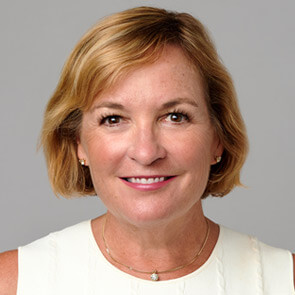
Former President and Chief Executive Officer (2022–2026), Insight
Joyce Mullen assumed her role as President and CEO of Insight Enterprises from 2022–2026, leading a $9.4B Fortune 500 integrator.
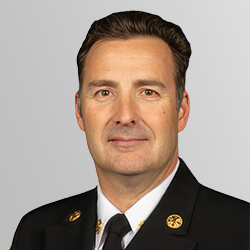
Fire Chief, San Bernardino County Fire, 11:22
Subscribe to our podcast today to get automatic notifications for new episodes. You can find Insight On on Amazon Music, Apple Podcasts, Spotify and YouTube.