Infographic text included for screen readers:
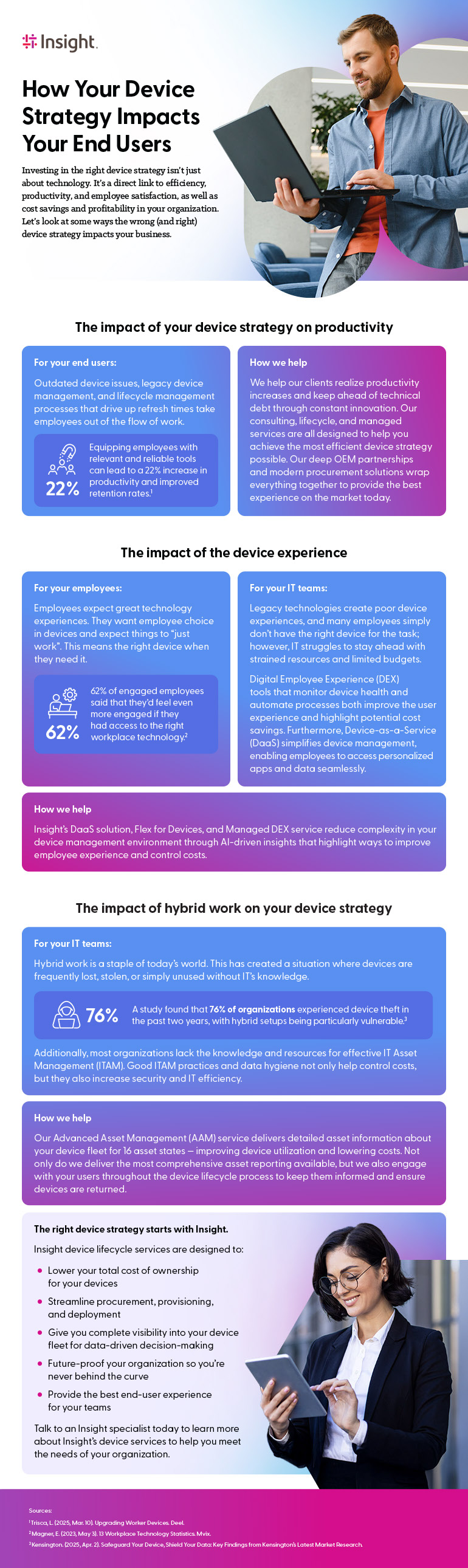
Investing in the right device strategy isn’t just about technology. It’s a direct link to efficiency, productivity, and employee satisfaction, as well as cost savings and profitability in your organization. Let’s look at some ways the wrong (and right) device strategy impacts your business.
The impact of your device strategy on productivity
For your end users:
Outdated device issues, legacy device management and lifecycle management processes that drive up refresh times take employees out of the flow of work.
Equipping employees with relevant and reliable tools can lead to a 22% increase in productivity and improved retention rates.1
How we help
We help our clients realize productivity increases and keep ahead of technical debt through constant innovation. Our consulting, lifecycle, and managed services are all designed to help you achieve the most efficient device strategy possible. Our deep OEM partnerships and modern procurement solutions wrap everything together to provide the best experience on the market today.
The impact of the device experience
For your employees:
Employees expect great technology experiences. They want employee choice in devices and expect things to “just work”. This means the right device when they need it.
62% of engaged employees said that they’d feel even more engaged if they had access to the right workplace technology.2
For your IT teams:
Legacy technologies create poor device experiences, and many employees simply don’t have the right device for the task; however, IT struggles to stay ahead with strained resources and limited budgets.
Digital Employee Experience (DEX) tools that monitor device health and automate processes both improve the user experience and highlight potential cost savings. Furthermore, Device-as-a-Service (DaaS) simplifies device management, enabling employees to access personalized apps and data seamlessly.
How we help
Insight’s DaaS solution, Flex for Devices, and Managed DEX service reduce complexity in your device management environment through AI-driven insights that highlight ways to improve employee experience and control costs.
The impact of hybrid work on your device strategy
For your IT teams:
Hybrid work is a staple of today’s world. This has created a situation where devices are frequently lost, stolen or simply unused without IT’s knowledge.
A study found that 76% of organizations experienced device theft in the past two years, with hybrid setups being particularly vulnerable.3
Additionally, most organizations lack the knowledge and resources for effective IT Asset Management (ITAM). Good ITAM practices and data hygiene not only help control costs, but they also increase security and IT efficiency.
How we help
Our Advanced Asset Management (AAM) service delivers detailed asset information about your device fleet for 16 asset states — improving device utilization and lowering costs. Not only do we deliver the most comprehensive asset reporting available, but we also engage with your users throughout the device lifecycle process to keep them informed and ensure devices are returned.
The right device strategy starts with Insight.
Insight device lifecycle services are designed to:
- Lower your total cost of ownership for your devices
- Streamline procurement, provisioning, and deployment
- Give you complete visibility into your device fleet for data-driven decision-making
- Future-proof your organization so you’re never behind the curve
- Provide the best end-user experience for your teams
Talk to an Insight specialist today to learn more about Insight’s device services to help you meet the needs of your organization.