Glossary What is Generative AI?
The next generation of disruptive technology has arrived and is ready to deploy. The time is now to identify how your organization can reap the benefits of generative artificial intelligence, explore use cases, and get started on your strategy. We’re excited to show you what’s on the horizon.
Generative AI
Generative AI is a branch of artificial intelligence (AI) dedicated to producing new and unique content, such as text, music, images and more, based on patterns and data it has learned from. Unlike traditional AI models that primarily classify or make predictions based on existing data, generative AI goes a step further by generating entirely new content that mimics the characteristics of the training data. This is made possible through techniques like neural networks, where complex mathematical models process sizable chunks of data to capture underlying patterns. Generative AI has found applications in various fields, including art, literature, music composition, and even in generating realistic images of objects and scenes. One of the most notable advancements in generative AI is the creation of deep learning models known as Generative Adversarial Networks (GANs), where two neural networks, a generator and a discriminator, work in tandem to produce increasingly refined and authentic content.
Generative AI's potential extends beyond mere replication; it introduces a transformative capability to generate novel and imaginative content. However, its creative outputs also raise ethical considerations, as the technology's ability to generate convincing fake content can be exploited for misleading or malicious purposes. As generative AI continues to evolve, striking a balance between its creative potential and responsible use becomes crucial. From generating artworks that challenge traditional notions of creativity to developing virtual characters that can engage in meaningful conversations, generative AI holds promise in reshaping how we interact with and perceive technology-generated content in the digital age.
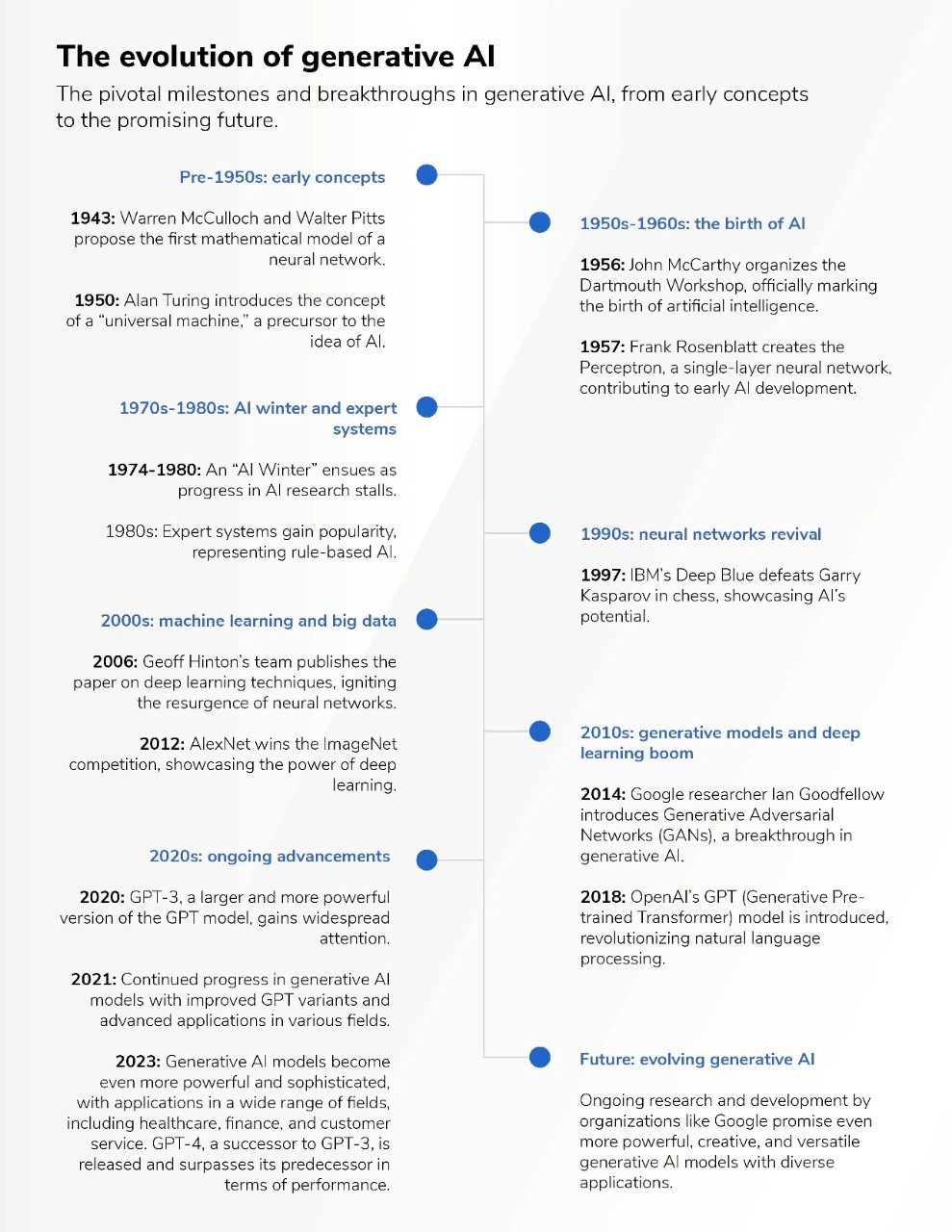
How does generative AI work?
Generative AI operates by leveraging advanced machine learning techniques, particularly neural networks, to generate new and coherent content that resembles the patterns and characteristics found in the training data it has been exposed to. At its core, generative AI employs models designed to learn and understand the underlying structures of data. One prominent example is the Generative Adversarial Network (GAN), which consists of two neural networks - a generator and a discriminator - engaged in a competitive learning process. The generator generates content, such as images or text, based on random noise or initial input, while the discriminator evaluates the generated content for authenticity against real examples from the training data. Through iterative back-and-forth interactions, the generator aims to produce content that increasingly fools the discriminator, leading to the creation of more convincing and coherent outputs. This adversarial process results in the generation of content that becomes progressively indistinguishable from genuine data.

Another approach within generative AI is the use of Recurrent Neural Networks (RNNs) and Variational Autoencoders (VAEs). RNNs are well-suited for sequences of data, such as text and music, by learning patterns and dependencies in sequential data to generate coherent outputs. VAEs, on the other hand, focus on learning the underlying distribution of the training data and then generating new content by sampling from this learned distribution. These techniques enable generative AI to create diverse outputs while maintaining the learned characteristics of the training data. The success of generative AI lies in its ability to capture the intricate relationships and features of data, allowing it to produce content that is both novel and consistent with the patterns it has learned.
Generative AI models
Generative AI models are at the forefront of modern artificial intelligence, pushing the boundaries of what machines can achieve in terms of creative output and data generation. These models harness complex algorithms and deep learning techniques to generate content that spans a wide range of forms, including text, images, music, and more. One of the groundbreaking contributions to this field is the Generative Adversarial Network (GAN), a two-part neural network architecture comprising a generator and a discriminator. This setup facilitates a dynamic interplay where the generator produces content and the discriminator evaluates its authenticity, driving the generator to continuously improve its outputs. GANs have yielded astonishing results, from producing photorealistic images that are indistinguishable from real photographs to creating entirely new art forms that challenge traditional notions of human creativity.

Within the realm of language and text generation, models like the GPT (Generative Pre-trained Transformer) series have demonstrated remarkable language understanding and generation capabilities. GPT models use a transformer architecture to process and predict sequences of words, making them highly proficient in tasks such as language translation, text completion, and even generating coherent essays or stories. These models have found applications in chatbots, content creation, and even assisting writers and researchers in generating ideas and content. Their ability to understand context and produce contextually relevant responses has led to more natural and engaging human-machine interactions.
As generative AI models continue to evolve, ethical considerations come to the forefront. The power of these models to generate highly convincing fake content raises concerns about their potential misuse in creating misinformation, deep fakes, or other malicious applications. Striking a balance between the creative potential of generative AI and responsible deployment becomes essential in order to leverage its benefits while safeguarding against potential harm. With ongoing research and innovation, generative AI models hold the potential to reshape industries, artistic expression, and even our conception of what is genuinely human in the creative process.
What are ChatGPT, Dall-E, and Gemini?
ChatGPT, Dall-E, and Gemini represent cutting-edge achievements in the field of generative AI, each showcasing the remarkable capabilities of artificial intelligence in diverse domains.

ChatGPT
ChatGPT, developed by OpenAI, stands out as a pioneering language model that has revolutionized human-machine interactions. Based on the GPT (Generative Pre-trained Transformer) architecture, ChatGPT can engage in natural and contextually relevant conversations, offering assistance, answering queries, and even simulating a wide range of personas. Its ability to understand and generate human-like text responses has found practical applications in customer support, content generation, and idea brainstorming.
Dall-E
Dall-E, another groundbreaking creation from OpenAI, takes generative AI into the realm of visual arts. Dall-E leverages the power of GANs to generate highly imaginative and creative images from textual descriptions. By interpreting text prompts and translating them into visual outputs, Dall-E can produce surreal and novel artworks that blur the lines between human imagination and machine-generated creativity. This has implications not only for artistic expression but also for design, visualization, and communication in various industries.
Gemini
Gemini (formerly Bard), the groundbreaking conversational AI service from Google, is driven by Google's cutting-edge large language model, PaLM 2. This innovative platform marries the vast spectrum of global knowledge with the remarkable capabilities and ingenuity of large language models, drawing on web-based information to deliver users with current, top-notch responses. Because Gemini was trained on data with real-time internet access and a constantly updated library, it can generate responses that are significantly more up-to-date compared to ChatGPT's responses. For instance, when asked, "What happened in London yesterday?" Gemini can provide a list of recent news highlights, while ChatGPT relies on information available as of September 2021 to make inferences.
The emergence of ChatGPT, Dall-E, and Gemini underscores the versatility of generative AI, with each model pushing the boundaries of what AI can achieve in language, research, visual arts, and creative writing.
What are the benefits of generative AI?
Generative AI, a revolutionary subset of artificial intelligence (AI), is rapidly transforming industries and reshaping our perceptions of technology's creative potential. By harnessing the power of complex neural networks and advanced machine learning techniques, generative AI has ushered in a new era of content generation, offering a plethora of benefits that extend across diverse fields.

1. Creative content generation
Expanding horizons and breaking barriers: Generative AI models, such as Gemini and GPT-3, have demonstrated an unprecedented ability to produce coherent, contextually relevant text that mirrors human communication. This capability is leveraged in content creation, automating tasks like drafting articles, generating marketing copy, and composing social media posts. Businesses can expedite their content production processes while maintaining a consistent and engaging online presence. Furthermore, generative AI empowers artists, writers, and musicians by providing them with a wellspring of inspiration and creative sparks. It can assist in generating story ideas, composing music, and even designing visual art, thereby augmenting human creativity rather than supplanting it.
2. Personalization and customer engagement
Enhancing user experiences: Generative AI enables hyper-personalized user experiences that cater to individual preferences and needs. E-commerce platforms leverage recommendation systems powered by generative models to suggest products that align with users' browsing and purchasing histories. Chatbots, built upon generative AI like ChatGPT, offer responsive and dynamic interactions, guiding customers through queries, troubleshooting, and inquiries with a human touch. This technology improves customer satisfaction and loyalty, enhancing the overall brand experience.
3. Scientific discovery and research advancements
Accelerating knowledge exploration: In scientific research, generative AI plays a pivotal role in accelerating knowledge discovery. It can analyze vast datasets, identify patterns, and propose hypotheses that researchers might not have considered. For instance, in drug discovery, generative models predict molecular structures and properties, potentially expediting the development of new pharmaceuticals. In fields like astronomy and genomics, generative AI aids in sifting through astronomical data or deciphering complex genetic sequences, pushing the boundaries of human exploration and understanding.
4. Design and innovation
Transforming idea generation: Designers and innovators are embracing generative AI to streamline the creative process. Architectural firms use generative models to create optimized building designs that maximize energy efficiency and aesthetics. In the automotive industry, generative AI assists in generating novel vehicle designs and optimizing aerodynamics. By rapidly generating and evaluating multiple design iterations, companies can innovate more efficiently and effectively.
5. Entertainment and gaming
Crafting immersive experiences Generative AI's impact in the entertainment sector is profound. Video game developers use it to generate realistic landscapes, characters, and animations, enhancing the immersion and realism of gameplay. It also powers procedural content generation, creating diverse and dynamic game environments that keep players engaged. In the film and music industries, generative AI aids in scoring soundtracks, producing visual effects, and even creating virtual actors, opening doors to new dimensions of storytelling and creativity.
What are the challenges of generative AI?
Generative AI, a realm where machines conjure up original content that echoes human creativity, holds immense promise across various domains. Yet, amid the remarkable potential lies a landscape riddled with challenges and complexities that demand careful consideration. As we navigate this uncharted territory, it's crucial to recognize and address the hurdles that come with the transformative power of generative AI.

1. Ethical dilemmas
Walking the fine line of responsibility: One of the most pressing challenges in generative AI centers on ethical concerns. The technology's ability to create highly convincing fake content, known as deep fakes, raises alarming prospects for misinformation, identity theft, and even the manipulation of public opinion. These concerns extend to privacy as well, as generative models can inadvertently disclose sensitive information contained in training data. Striking a balance between the technology's creative potential and its potential for misuse is a daunting task that requires collaboration between AI developers, policymakers, and society at large.
2. Bias and fairness
Echoes of inequality in generated content: Generative AI models learn from the data they are trained on, which means they can inherit biases present in that data. This perpetuates existing societal biases, reinforcing stereotypes and inequalities in the content they generate. Efforts to mitigate bias and ensure fairness in generative AI output demand careful curation of training data, meticulous algorithm design, and continuous monitoring. Failing to address bias could lead to the unintentional amplification of discriminatory content, exacerbating societal divisions.
3. Quality control and trust
The fine art of evaluation: Assessing the quality and authenticity of content generated by AI models is an ongoing challenge. Generative AI, particularly in its early stages, might produce outputs that are plausible but fundamentally incorrect or nonsensical. This poses a risk in domains where accuracy is paramount, such as medical diagnosis or scientific research. Establishing mechanisms for rigorous evaluation and quality control is essential to ensure that AI-generated content aligns with intended outcomes and maintains trust in the technology.
4. Data privacy and security
Protecting the source of creativity: Generative AI's prowess hinges on its exposure to massive datasets containing diverse examples of human creativity. However, these datasets often contain sensitive personal information that raises concerns about data privacy and security. Striking a balance between harnessing the potential of data and safeguarding individuals' privacy rights is essential. The misuse or compromise of such datasets could have far-reaching consequences, necessitating robust encryption, anonymization, and stringent data protection measures.
5. Environmental impact
Computing power and sustainability: The training of large-scale generative AI models requires substantial computing power and energy resources. The environmental impact of these energy-intensive processes poses a challenge in an era where sustainability is paramount. Balancing the advancement of generative AI with the imperative to reduce carbon footprints demands innovation in hardware design, algorithm efficiency, and responsible resource management.

What are some examples of generative AI tools?
Generative AI has spurred the development of several remarkable tools that showcase its capabilities across different domains:
- Gemini (formerly Bard): A conversational generative AI chatbot, Gemini was developed by Google. Bard (now Gemini) was initially powered by the LaMDA family of large language models, but is now powered by Gemini Pro. Trained to help users boost productivity on Google Cloud, Gemini in Google Cloud provides personal and contextualized AI assistance. Gemini for Google Workspace is available in the Google suite of productivity apps (like Doc, Sheets, and Slides) and helps users write, visualize, organize, and more.
- GPT-3 (Generative Pre-trained Transformer 3): This language model by OpenAI can generate human-like text based on prompts and is used in content creation, chatbots, code generation, and more.
- Dall-E: Also from OpenAI, Dall-E is an AI model that creates unique images from textual descriptions, pushing the boundaries of creative visual art.
- StyleGAN: This generative model is known for creating highly realistic images that can be fine-tuned to control specific visual features, making it useful in fields like computer graphics and design.
- ChatGPT: Another OpenAI creation, ChatGPT excels in simulating human-like conversations, making it a powerful tool for customer support, virtual assistants, and interactive applications.
- MuseNet: Developed by OpenAI, MuseNet generates music in various styles and genres, showcasing the potential of AI in music composition and creativity.
- RunwayML: This platform empowers artists, designers, and creators to experiment with various generative models, facilitating exploration in areas such as art, design, and interactive installations.
- Artbreeder: It allows users to blend and manipulate images to create new and unique visuals, enabling the democratization of artistic expression.
- This Person Does Not Exist: This website generates photorealistic human faces that don't actually belong to real people, highlighting the impressive realism achievable by generative AI.
- AI Dungeon: This interactive text-based adventure game uses GPT-3 to dynamically respond to player input, creating unique and evolving storylines.
Ethics and bias in generative AI
- Ethics in generative AI: One of the foremost ethical concerns revolves around the perpetuation of bias. Generative AI models learn from extensive datasets, which may unintentionally contain biases present in society. When these biases are reflected in AI-generated content, they perpetuate stereotypes and inequalities, leading to unintended negative impacts. This issue necessitates vigilant data curation, algorithmic transparency, and continuous monitoring to ensure that generative AI respects diversity and fairness in its outputs.
- Bias amplification and mitigation: Generative AI's capacity to inadvertently amplify biases poses a critical challenge. Addressing this requires not only curating balanced and diverse training data but also developing algorithms that actively counteract existing biases. By fostering partnerships between AI developers and ethicists, it is possible to design systems that proactively identify and rectify biases, ensuring that AI-generated content contributes to an equitable digital landscape.
- Transparency and accountability: The opacity of AI decision-making processes raises concerns about accountability. Lack of transparency makes it difficult to determine how and why AI makes certain content choices, potentially leading to the unintentional propagation of biased content. To enhance accountability, developers must prioritize transparency through explainable AI techniques, enabling users to understand and challenge AI-generated outputs.
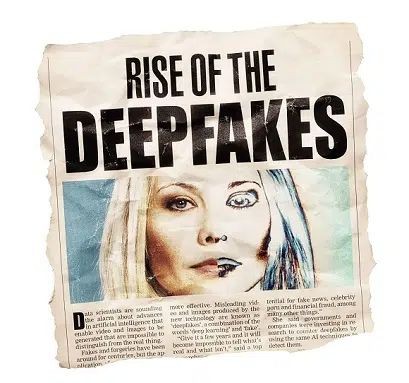
- Guarding against misinformation: Generative AI's ability to create realistic yet fabricated content, such as deep fakes, poses a significant risk to truthfulness. Ensuring that safeguards against misinformation are in place, including robust verification mechanisms and public awareness campaigns, is crucial to preserving the integrity of information.
Generative AI vs. AI
Generative AI and AI (artificial intelligence) are closely related terms, yet they refer to different aspects within the realm of artificial intelligence.
AI (artificial intelligence): AI is a broad concept that encompasses machines' ability to perform tasks that typically require human intelligence. This includes problem-solving, decision-making, pattern recognition, language understanding, and more. AI techniques include machine learning, where algorithms learn from data to make predictions or classifications, and rule-based systems that follow predefined instructions to perform tasks.

Generative AI: Generative AI is a subset of AI that focuses specifically on creating new and original content, such as images, text, music, and more, based on patterns and data it has learned from. It employs techniques like neural networks to generate content that resembles the training data it has been exposed to. Examples include language models like GPT-3 that generate text, Dall-E that creates images from textual descriptions, and music composition models like MuseNet.
In essence, AI encompasses a wide range of technologies that enable machines to perform tasks intelligently, while generative AI is a specialized branch of AI that focuses on creative content generation. Generative AI is a subset of the broader field of AI, reflecting its unique capacity to produce novel and imaginative outputs.

Best practices for using generative AI
Generative AI offers transformative potential, but its utilization requires careful consideration to ensure responsible and impactful outcomes. Here are some best practices to guide the use of generative AI:
- Understand the technology: Gain a comprehensive understanding of how generative AI works, its strengths, limitations, and potential biases. This knowledge will help you make informed decisions and avoid unrealistic expectations.
- Curate high-quality data: Choose high-quality, diverse, and representative datasets for training generative AI models. Well-curated data minimizes biases and enhances the accuracy and creativity of the generated content.
- Prevent bias: Be vigilant about bias in training data and model outputs. Implement strategies such as debiasing algorithms and fairness checks to ensure that generated content remains inclusive and unbiased.
- Transparency and explainability: Prioritize transparency by using models with explainable AI features. Understand how the AI arrives at its decisions and outputs, fostering trust and accountability.
- Start with small inputs: When using generative AI models, begin with small and controlled inputs to gauge the model's performance and behavior before moving to more complex tasks.
- Human-AI collaboration: Generative AI is a tool to enhance human creativity, not replace it. Foster collaboration between AI and human experts to leverage the strengths of both.
- Review and moderation: Regularly review and moderate the content generated by the AI to ensure its quality, relevance, and alignment with intended outcomes.
- Protect privacy: Ensure that the data used for training and generating content adheres to privacy regulations and safeguards individuals' personal information.
- Educate users: If deploying AI-generated content publicly, educate users about the potential for AI involvement to maintain transparency and authenticity.
- Ethical guidelines: Establish internal ethical guidelines that define the acceptable uses and boundaries of generative AI, especially in areas prone to misinformation or sensitive content.
- Continuous learning: Stay updated with the latest developments in generative AI and its ethical considerations. Regularly reassess and adapt your practices based on new insights.
- Feedback loop: Establish a feedback loop with users to improve the quality of generated content and address any concerns or challenges they encounter.

The future of generative AI
The future of generative AI holds immense promise, with innovations that are poised to transform industries and human experiences. Here's a glimpse into what lies ahead:
- Personalization and customization: Generative AI will enable unprecedented levels of personalization in various domains. From tailored content creation to individualized product design, AI will cater to unique preferences, enhancing user experiences and satisfaction.
- Enhanced creativity: Generative AI will collaborate with human creators, amplifying their creative abilities. Artists, designers, and writers will use AI tools to ideate, experiment, and expand the boundaries of their work.
- Human-machine collaboration: The synergy between humans and AI will deepen. AI will assist professionals across fields, offering insights, suggesting solutions, and streamlining processes, ultimately driving innovation.
- Education and learning: Generative AI could revolutionize education, creating interactive and adaptive learning content tailored to individual student needs, fostering more engaging and effective learning experiences.
- Medicine and research: AI-generated models will accelerate drug discovery, simulate biological processes, and assist medical professionals in diagnostics, revolutionizing healthcare and scientific research.
- Entertainment and gaming: AI-generated narratives, characters, and worlds will reshape storytelling and gaming experiences, leading to interactive narratives and games that respond dynamically to user choices.
- Virtual reality and augmented reality: Generative AI will contribute to immersive virtual and augmented reality experiences, crafting realistic environments and characters that enhance the sense of presence.
- Sustainable design and innovation: AI-driven optimizations will lead to more sustainable designs in architecture, engineering, and manufacturing, minimizing resource consumption and environmental impact.
- Multimodal creativity: AI models that can generate content across multiple modalities, such as text, image, and sound, will enable holistic and immersive content experiences.
- Ethics and regulation: The future will bring heightened focus on ethical AI practices and regulations to ensure responsible deployment, safeguarding against biases, misinformation, and misuse.
- Continued research and development: Ongoing research will refine generative models, addressing challenges like bias and explainability, paving the way for more reliable and versatile AI-generated content.
Generative AI's evolution will be marked by its integration into various aspects of daily life, reshaping industries and human interaction. As the technology matures, its responsible and ethical development will be paramount in unlocking its full potential for positive impact. If you’re ready to start tapping into the power of generative AI, join Insight's experts for a complimentary Generative AI Discovery consultation. Sign up today to uncover potential use cases for Generative AI in your organization and develop an action plan to harness its creative power for innovation and problem-solving.

By / 20 Oct 2023 / Topics: Artificial Intelligence (AI) , Cloud , Digital transformation , IT modernization