Infographic text included for screen readers:
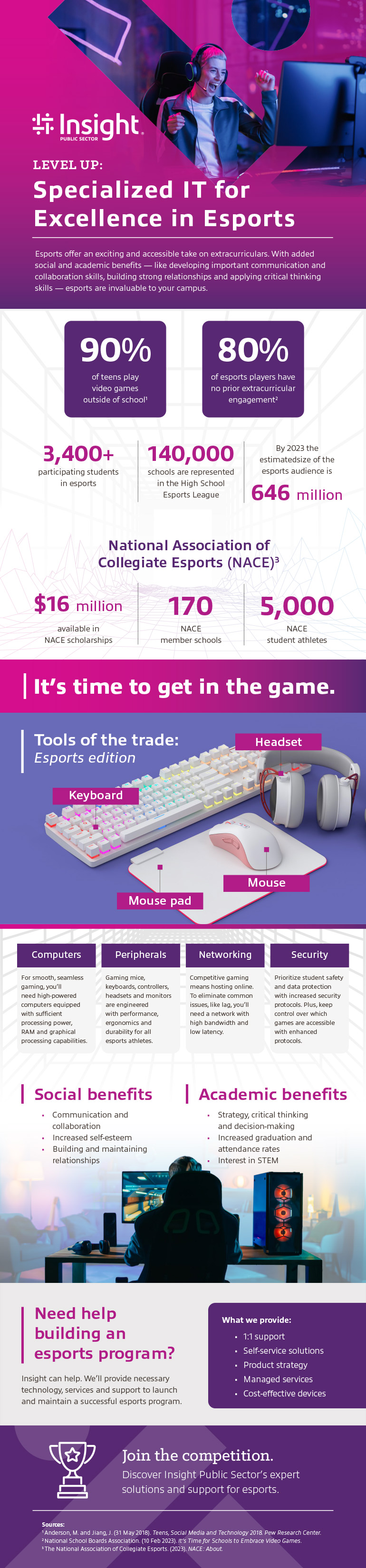
Esports offer an exciting and accessible take on extracurriculars. With added social and academic benefits — like developing important communication and collaboration skills, building strong relationships and applying critical thinking skills — esports are invaluable to your campus.
- 72% of teens play video games outside of school
- 80% of esports players have no prior extracurricular engagement
- 140,000 participating students in esports
- 3,400+ schools are represented in the High School Esports League
- By 2023 the estimated size of the esports audience is 646 million
National Association of Collegiate Esports (NACE)
- $16 million available in NACE scholarships
- 170 NACE member schools
- 5,000 NACE student athletes
It’s time to get in the game.
Tools of the trade: Esports edition
Basics:
- Keyboard
- Mouse
- Mouse pad
- Headset
Computers
For smooth, seamless gaming, you’ll need high-powered computers equipped with sufficient processing power, RAM and graphical processing capabilities.
Peripherals
Gaming mice, keyboards, controllers, headsets and monitors are engineered with performance, ergonomics and durability for all esports athletes.
Networking
Competitive gaming means hosting online. To eliminate common issues, like lag, you’ll need a network with high bandwidth and low latency.
Security
Prioritize student safety and data protection with increased security protocols. Plus, keep control over which games are accessible with enhanced protocols.
Social benefits
- Communication and collaboration
- Increased self-esteem
- Building and maintaining relationships
Academic benefits
- Strategy, critical thinking and decision-making
- Increased graduation and attendance rates
- Interest in STEM
Need help building an esports program?
Insight can help. We’ll provide necessary technology, services and support to launch and maintain a successful esports program.