Article Current Cloud Computing Statistics Send Strong Signal of What's Ahead
The future is now. Technology is advancing at such a rapid pace that sometimes it’s easy to get lost in the mix. These cloud computing statistics highlight the staying power of cloud technology.
By Michael Lazar / 4 Nov 2016 / Topics: As a service , Cloud , Software

Let’s take an in-depth look at the most recent cloud computing statistics, and deliver an overview of current trendsetters and prospective future innovations that will reshape everything in this industry.
The current state of cloud computing as told through statistics
Cloud computing services are quickly becoming the biggest revenue generator for leading software companies of the present day. A detailed Forbes report helps us better understand why.
Think tanks have collectively predicted that:
- Microsoft will generate at least 30% of its annual revenue via cloud based software services by 2018.
- Amazon has seen year-over-year growth of 68% from its cloud services, a number that’s expected to exponentially increase by 2018.
Annual global spending on cloud services is expected to increase by a 19.4% Compound Annual Growth Rate (CAGR) by 2019.
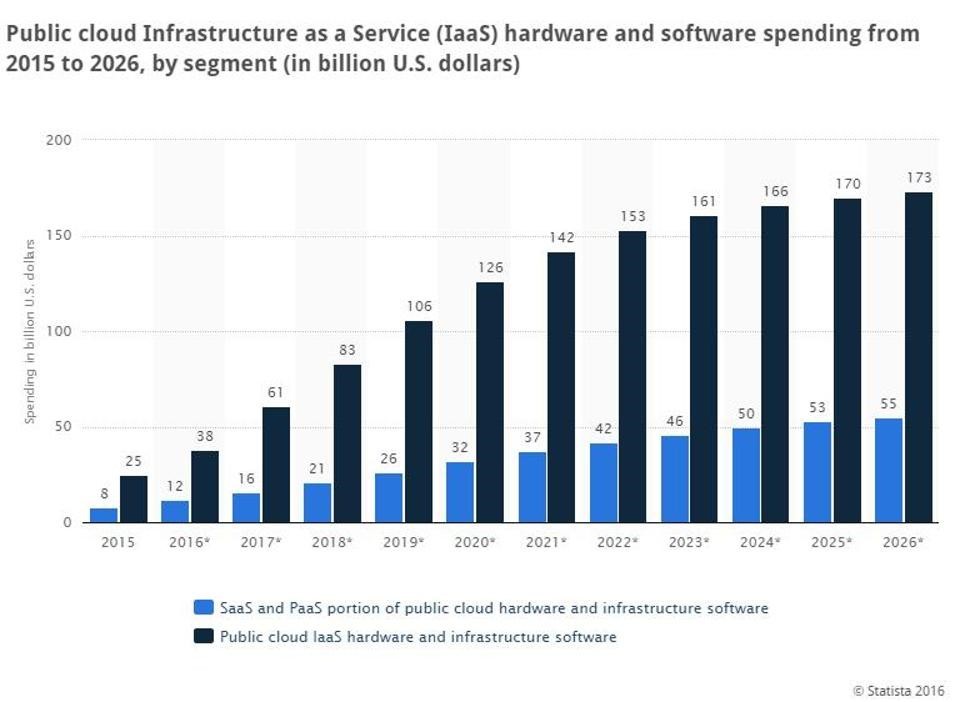
According to IDC, cloud computing services are expected to outgrow Software as a Service (SaaS), with cloud growth projected at 30.6%; as compared to SaaS, which has a predicted 27% growth rate through 2019.
What’s more, packaged software is in the midst of a decline, and will account for just 10% of enterprise-grade installations. Meanwhile, SaaS will drop down to just 25% of installations over the next two years. Translation: Cloud solutions will soon become the market dominator, a trend that will continue to rise as the infrastructure becomes more accommodating.
Pertinent cloud computing statistics you need to know
Paying attention to the most current cloud computing statistics is noteworthy. That’s because these numbers enable us to get a real snapshot of just how rapidly this industry has grown since its inception.
According to think tank RightScale’s “2016 State of the Cloud Report”:
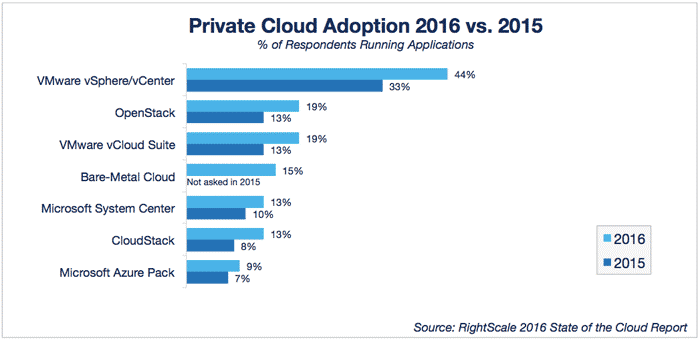
- Private cloud adoption rates are at 77% for 2016, an increase from 63% in 2015.
- Hybrid cloud adoption rates are also up, increasing to 71% from 58% year-over-year.
- Enterprise cloud adoption has grown to 31%, up from 13% at the start of 2015.
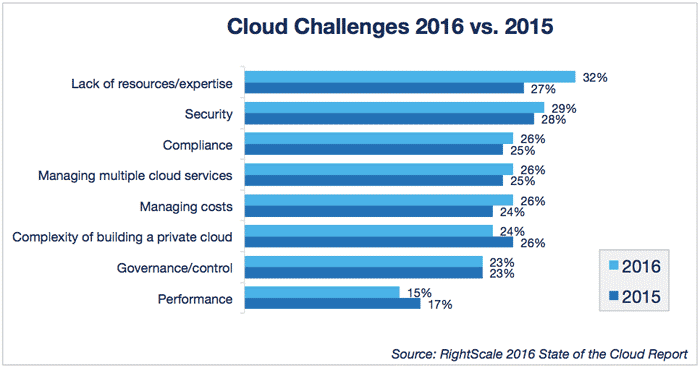
A need for resources is the new top cloud adoption concern (32%), overtaking the previous top cloud concern, which was security (29%). Additionally, 26% of companies are concerned about cloud adoption, primarily due to the perceived cost of integration.
The innate advantages of cloud computing
As Business 2 Community reports, 37% of SMBs are currently integrated into some form of a cloud solution. While the remaining entities do have a few concerns regarding cloud migration, the advantages of cloud computing far outweigh any caveats. For one, the cloud is a flexible solution, according to Gartner, and offers “operational agility” that makes it worth the resources necessary to migrate.
The ease of backup and recovery are another highlight, explains Aberdeen, and are the primary reasons why Small and Medium Businesses (SMBs) are migrating. Notable other advantages include:
- Improved collaboration
- The ability to work from anywhere remotely
- Control of documents and files
- A reduced carbon footprint
Why cloud based software solutions are the future
Another advantage that shouldn’t be overlooked is the ability of smaller enterprises to harness the power of big data without the big bill.
Such an offering automatically gives smaller businesses a competitive advantage against larger corporations. Previously, big data wasn’t even a viable consideration, unless an entity had an enterprise-level budget. But the cloud changes all of this. It provides a variety of services, software and accessibility that weren’t even a consideration for small businesses just a few years ago.


.png)